Certified Refurbished Nikon D7500: The Fast Professional Verdict
Deciding whether to invest in a Nikon D7500 comes down to demanding operational speed, robust metering, and responsive handling without taking on the size of a full-frame system. For photographers evaluating a…
By Brian Carver 8 min read

Nikon D7500
Nikon
Excellent
Our score: 9.4/10
Scores are out of 10, based on listed specifications and buyer feedback.
- Specs listed
- 10
- Section
- Cameras & Drones
Buyer favourite Scored 9.0/10 or higher
Check price on Amazon We may earn a commission if you buy through this link.
As Amazon Associates, we earn from qualifying purchases. This means we may receive a small commission at no extra cost to you if you click through and make a purchase.
Deciding whether to invest in a Nikon D7500 comes down to demanding operational speed, robust metering, and responsive handling without taking on the size of a full-frame system. For photographers evaluating a nikon d7500 certified refurbished unit, this camera delivers the imaging core of higher-tier professional tools in an agile package. Featuring a 20.9-megapixel APS-C CMOS sensor paired with processing and metering equivalent to the flagship D500, the body captures rapid bursts at up to 8 frames per second while handling 4K Ultra HD video capture. It represents a pragmatic choice for creators who require dedicated physical controls, quick optical phase detection, and extensive DX-mount glass compatibility.
In this technical review, we evaluate the performance credentials of this digital SLR to determine whether it remains a dependable asset for modern production demands. We examine the core nikon d7500 refurbished specs, tracking accuracy during fast-paced sequences, low light capabilities, and multimedia recording features. Furthermore, we clarify environmental limits, inspect alternative kits, and answer common questions regarding maintenance, connectivity, and refurbished hardware expectations so you can make an informed acquisition.


What You Get With the Nikon D7500
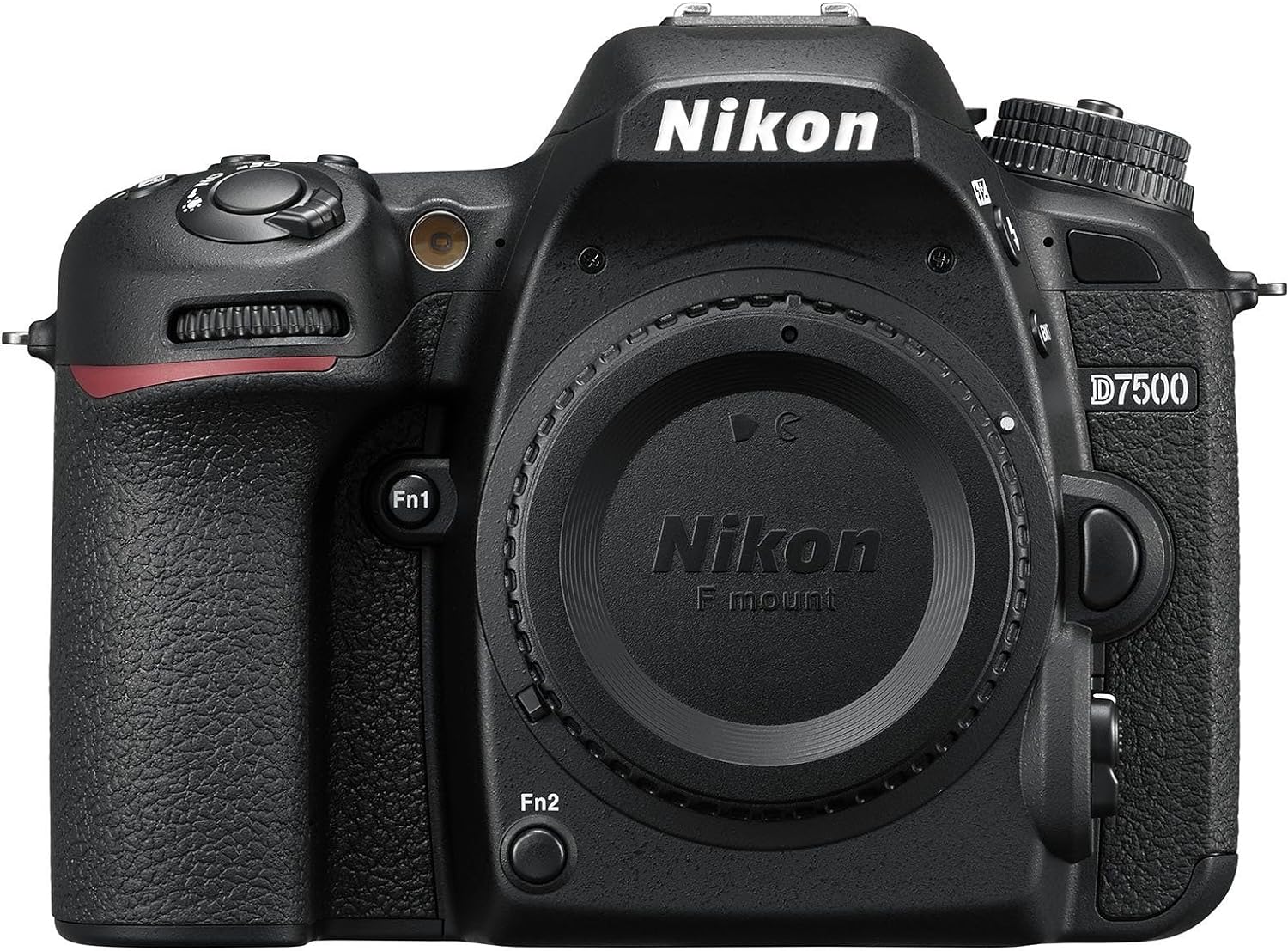
The Nikon D7500 arrives configured as a standalone DX-format digital SLR body finished in black. While peripheral accessories such as external chargers, cables, or protective caps depend on specific refurbished grading and the listing does not specify included package contents beyond the core camera body, the factory-integrated hardware components include:
In the box
- High-Resolution DX Sensor: A 20.9-megapixel APS-C CMOS sensor designed for sharp still capture and wide dynamic range.
- D500-Tier Processing Engine: Processing and exposure metering architecture inherited from Nikon’s flagship DX system.
- Multi-CAM 51-Point AF System: An optical autofocus array boasting 15 cross-type sensors and Group Area AF tracking for pinpoint target acquisition.
- High-Speed Shutter Unit: Fast mechanical drive delivering up to 8 frames per second continuous burst shooting with shutter velocities up to 1/8000 second.
- Articulated Touchscreen Interface: A 3.2-inch tilting LCD monitor with 922,000 dots of resolution, supporting capacitive touch navigation.
- Ultra HD Video System: In-camera 4K Ultra HD and 1080p Full HD video recording with stereo sound, digital image stabilization, power aperture control, and auto ISO.
- Dual Wireless Communication: Integrated Wi-Fi and Bluetooth hardware for tethering and mobile data transfers using the Nikon SnapBridge application.
Key Specifications
| Image Sensor Type | APS-C CMOS Sensor |
|---|---|
| Effective Still Resolution | 20.9 Megapixels |
| Lens Mount | Nikon DX |
| Continuous Drive Rate | Up to 8 fps |
| Autofocus Hardware | 51-point AF system with 15 cross-type sensors |
| Shutter Velocity Range | 30 seconds to 1/8000 second |
| Video Capture Resolution | 4K Ultra HD and 1080p Full HD |
| Display Monitor | 3.2-inch tilting touchscreen LCD (922k dots) |
| Aspect Ratios | 16:9, 3:2 |
| Operating Parameters | 0 °C to 40 °C (32 °F to 104 °F), humidity 85% or less |
All 104 attributes from the listing
| Compatible Mountings | Nikon DX |
|---|---|
| Aspect Ratio | 16:9, 3:2 |
| Sensor Type | CMOS |
| File Format | JPEG, Raw |
| Image stabilization | Digital |
| Maximum Aperture | 3.5 millimeters |
| Expanded ISO Minimum | 100 |
| Photo Sensor Resolution | 20.9 mp |
| Photo Sensor Size | APS-C |
| Maximum Shutter Speed | 30 |
| Minimum Shutter Speed | 1/8000 s seconds |
| Exposure Control | aperture-priority |
| Form Factor | DSLR |
| Effective Still Resolution | 20.9 mp |
| Special Feature | Wireless |
| Color | Black |
| Screen Size | 3.2 |
| Shooting Modes | Aperture-Priority, Auto modes, Manual, Programmed auto with flexible program, Scene Modes, Shutter-Priority, Special Effects Modes U1, U2 |
| Item Weight | 1.7 pounds |
| Video Resolution | 4K UHD 2160p |
| Viewfinder | flexible LCD |
| Flash Modes | Automatic |
| Camera Flash | Built-In |
| Skill Level | Professional |
| Specific Uses For Product | Photography |
| Compatible Devices | HDMI devices, Nikon F mount lenses, USB devices |
| Continuous Shooting | 8 frames per second |
| Aperture modes | [F3.5-F5.6, F4.5-F6.3] |
| Viewfinder Magnification | 0.94x |
| Flash Sync Speed | 1/250 Second |
| Connectivity Technology | HDMI, USB |
| Wireless Technology | Bluetooth, Wi-Fi |
| Video Output | Mini-HDMI |
| Total USB 3.0 Ports | 2 |
| Total USB Ports | 1 |
| Total Video Out Ports | 1 |
| Total USB 2.0 Ports | 1 |
| Hardware Interface | AV Port |
| HDMI Type | Type C Mini HDMI |
| Display Type | LCD |
| Dots Per Screen | 922,000 |
| Display Fixture Type | Tilting |
| Display Maximum Resolution | 1560 x 882 |
| Display Resolution Maximum | 1560000 pixels |
| Touch Screen Type | LCD |
| Flash Memory Type | SD, SDHC (UHS-I compliant), SDXC (UHS-I compliant) memory card |
| Memory Slots Available | 1 |
| Memory Storage Capacity | 16 GB |
| Recording Capacity | 30 minutes |
| Write Speed | 8 fps |
| Flash Memory Speed Class | UHS-I or UHS-III |
| Flash Memory UHS Speed Class | UHS-I or UHS-III |
| Flash Memory Video Speed Class | UHS-I or UHS-III |
| Flash Memory Bus Interface Type | UHS-I or UHS-III |
| Flash Memory Installed Size | 16 GB |
| Compatible Flash Memory Type | SD, SDHC, SDXC |
| JPEG Quality Level | Normal |
| Supported Image Format | JPEG, RAW |
| Bit Depth | 14 Bit |
| Total Still Resolution | 20.9 mp |
| Maximum Image Size | 5568 pixels |
| Optical Zoom | 1 x |
| Lens Type | Converter |
| Zoom | Digital Zoom |
| Minimum Focal Length | 18 millimeters |
| Real Angle Of View | 2.02 degrees |
| Focal Length Description | ~24mm (DX-format), ~35mm (full-frame equivalent) |
| Digital Zoom | 7.8 |
| Number of Diaphragm Blades | 7 |
| Lens Construction | Telephoto |
| Metering Methods | Center Weighted |
| White Balance Settings | Flash torch |
| Self Timer | 20 seconds |
| Crop Mode | 1.5x |
| Brand | Nikon |
| Model Name | D7500 |
| Built-In Media | Camera Body Only |
| External-Memory Size | 16 GB |
| Model Number | 1581 |
| Model Series | D7500 |
| Series Number | 7000 |
| Global Trade Identification Number | 00018208015818 |
| Generation | 3 |
| Number of Items | 1 |
| UPC | 018208953493 018208015818 018208953530 |
| Unit Count | 1 Count |
| Age Range Description | Adult |
| Manufacturer | Nikon |
| Manufacturer Part Number | 1581 |
| Warranty Description | Manufacturer |
| Best Sellers Rank | #12,728 in Electronics (See Top 100 in Electronics) #7 in DSLR Cameras |
| ASIN | B06Y5ZCFHX |
| Digital Scene Transition | false |
| Image Capture Type | Video |
| Auto Focus Technology | Eye Detection |
| Focus Features | autofocus self-illumination light |
| Autofocus Points | 51 |
| Focus Type | manual-and-auto |
| Focus Mode | Automatic AF (AF-A), Continuous-Servo AF (AF-C), Manual Focus (MF), Single-Servo AF (AF-S) |
| Phase Detection Sensor Points | 15 |
| Photo Sensor Technology | CMOS |
| Supported File Format | JPEG, Raw |
| Image Stabilization | Digital |
| Metering Description | Center Weighted |
Figures as published by the manufacturer on the Amazon listing.
Autofocus Performance and Rapid Subject Capture
Dynamic field photography demands an autofocus mechanism that acquires subjects instantly and maintains tracking without drift. The nikon d7500 autofocus performance is driven by a sophisticated 51-point autofocus module supported by 15 cross-type sensors. These cross-type points read horizontal and vertical contrast patterns simultaneously, allowing the system to establish immediate focus lock even when tracking erratic subjects across complex visual backgrounds. With dedicated Group Area AF integrated into the firmware, the system evaluates a cluster of points together, mitigating the risk of focus jumping unintentionally to background elements.
Action shooters will find the nikon d7500 for sports photography well-suited for high-cadence assignments. The shutter mechanism achieves up to 8 frames per second burst capture, pairing seamless mechanical drive with continuous predictive focus tracking. Reaching maximum shutter speeds of 1/8000 second, the unit allows operators to freeze ultra-fast athletic motions and high-velocity field events in bright sunlight with wide aperture settings without encountering overexposure.
Compared to entry-level hardware like the nikon d3400 kit, which utilizes a simpler 11-point phase detection layout, the 51-point network on this DX body provides substantially wider frame coverage. For pragmatic creators monitoring continuous bursts, the high-throughput processing pipeline processes JPEG and RAW data streams efficiently, keeping camera buffers clearing swiftly during intensive sporting events and wildlife assignments.
Low Light Architecture and Sensor Dynamics
Shooting in poorly lit venues or unpredictable outdoor environments requires clean signal amplification and wide latitude. The nikon d7500 low light performance originates from its 20.9-megapixel APS-C CMOS sensor. By sharing identical imaging processing and metering architecture with the flagship D500, this sensor configuration optimizes individual pixel surface area to maximize light gathering efficiency, minimizing digital grain when operating at extended sensitivities above base ISO 100.
Color fidelity and tonal gradation remain stable across variable illumination conditions. When handling RAW captures, the sensor preserves clean shadow recovery and deep contrast without introducing chromatic noise bands. The camera supports standard 3:2 and widescreen 16:9 aspect ratios, offering framing versatility directly at the sensor level for varied editorial formats.
The lineage of the nikon d7500 dx format body represents years of mechanical refinement over early digital classics like the nikon d200 camera. Where older CCD and CMOS platforms struggled in dim settings, this camera maintains crisp edge delineation and balanced metering, making it a reliable production asset for concert venues, twilight landscapes, and interior event documentation.
Video Workflow and Articulated Monitoring
Modern multimedia creators frequently balance still photography with high-resolution video production. The nikon d7500 4k video implementation records both 4K Ultra HD and 1080p Full HD video with integrated stereo sound recording. Videographers can utilize power aperture control to execute smooth, motorized f-stop adjustments during active takes, preventing sudden exposure steps. In-camera 4K UHD time-lapse functions streamline sequence creation directly within the hardware without requiring external stitching software.
Composition flexibility is enhanced by the large 3.2-inch tilting LCD monitor. Packing 922,000 dots of resolution, this screen allows operators to tilt the display upward for waist-level shooting or downward for overhead perspectives. The capacitive touch functionality enables quick menu adjustments, autofocus point selection, and smooth playback scrubbing. Digital image stabilization is incorporated for handheld motion capture, assisting operators when panning or walking with unstabilized lenses.
For creators comparing traditional DSLR recording workflows against modern mirrorless bodies like the nikon z 30 body, the D7500 offers the advantage of an optical glass pentaprism for still shooting alongside a tilting live view screen for video capture. Built-in Wi-Fi and Bluetooth capabilities further integrate the body with the Nikon SnapBridge application, allowing background image transfers and wireless camera triggers straight from mobile devices.
Refurbished Reliability and Field Durability
Selecting a certified refurbished digital SLR requires understanding the hardware’s operational parameters and environmental tolerances. The Nikon D7500 is engineered to operate reliably across a specified temperature range of 0 °C to 40 °C (32 °F to 104 °F) with relative humidity levels up to 85 percent without condensation. These factory specifications ensure the mechanical shutter, mirror box assembly, and digital sensor remain within calibration limits during rigorous field use.
Buyers frequently investigate refurbished nikon d7500 warranty terms prior to acquisition. The listing does not specify explicit warranty duration, return parameters, or bundled maintenance coverage for this specific refurbished inventory. As a result, prospective owners should confirm vendor-specific inspection standards and guarantees directly with the seller before deploying the unit on critical commercial projects.
Despite the lack of explicit warranty details in the listing, the physical structure of the D7500 retains its durable black DSLR form factor. The ergonomic deep grip provides secure handholding during extended shooting sessions, while the physical mode dial provides fast access to Manual, Shutter-Priority, Aperture-Priority, Scene modes, and customizable U1/U2 user presets. This mechanical resilience ensures that a well-maintained certified refurbished body delivers the longevity expected of a workhorse DSLR.
Nikon D7500 Pros and Cons
Pros
- Continuous shooting up to 8 fps
- 51-point AF system with 15 cross-type sensors
- Flagship D500 image processing and metering
- 4K Ultra HD and 1080p video recording
- Tilting 3.2-inch touchscreen display
- Built-in Wi-Fi and Bluetooth connectivity
Cons
- Digital rather than sensor-shift image stabilization
- Operating temperature limited to 40 degrees Celsius
- No bundled lens in body-only configuration
Is the Nikon D7500 Worth It
When asking is nikon d7500 worth it, the answer depends largely on your shooting discipline and existing lens investments. For action enthusiasts, high school sports photographers, and outdoor documentarians, this camera provides professional-grade continuous drive speeds, high-accuracy phase detection, and flagship image quality in a well-balanced chassis. Its physical dual-dial interface, optical pentaprism viewfinder, and long-lasting mechanical shutter mechanism make it a dependable workhorse that bypasses the battery-draining electronic viewfinders common in mirrorless designs.
However, the camera may not suit content creators whose priority is ultra-lightweight travel or vlogging. The DSLR mirror box design naturally adds depth compared to modern mirrorless alternatives, and video stabilization is digital rather than in-body sensor shift. Furthermore, users seeking extreme resolution for heavy studio cropping may prefer higher pixel counts over the action-optimized 20.9-megapixel sensor.
For pragmatic shooters who prioritize speed, optical tracking, and access to the massive catalog of DX and FX lenses, the certified refurbished Nikon D7500 represents an exceptional balance of mechanical capability and imaging prowess. It delivers professional-tier metering and autofocus architecture without the premium weight of a full-frame flagship.
Other Options to Consider
| Model | Our score | Why it is here |
|---|---|---|
 NikonNikon D7500 DX-Format Digital SLR BodyReviewed here |
9.4/10Excellent | The model reviewed on this page. View listing |
 CanonCanon EOS Rebel T7 DSLR Camera EF-S 18-55mm f/3.5-5.6 is II Lens… |
9.2/10Very good | 24.1 Megapixel CMOS: Listed as the Canon EOS Rebel T7 DSLR Camera EF-S 18-55mm f/3.5-5.6 IS II Lens Kit, this option provides a 24.1-megapixel APS-C CMOS sensor, Full HD video, and built-in Wi-Fi, making it a better fit for beginner photographers who want an included zoom lens rather than a standalone camera body. View listing |
 CanonCanon EOS Rebel T7 DSLR Camera Double Zoom Lens Kit with EF-S… |
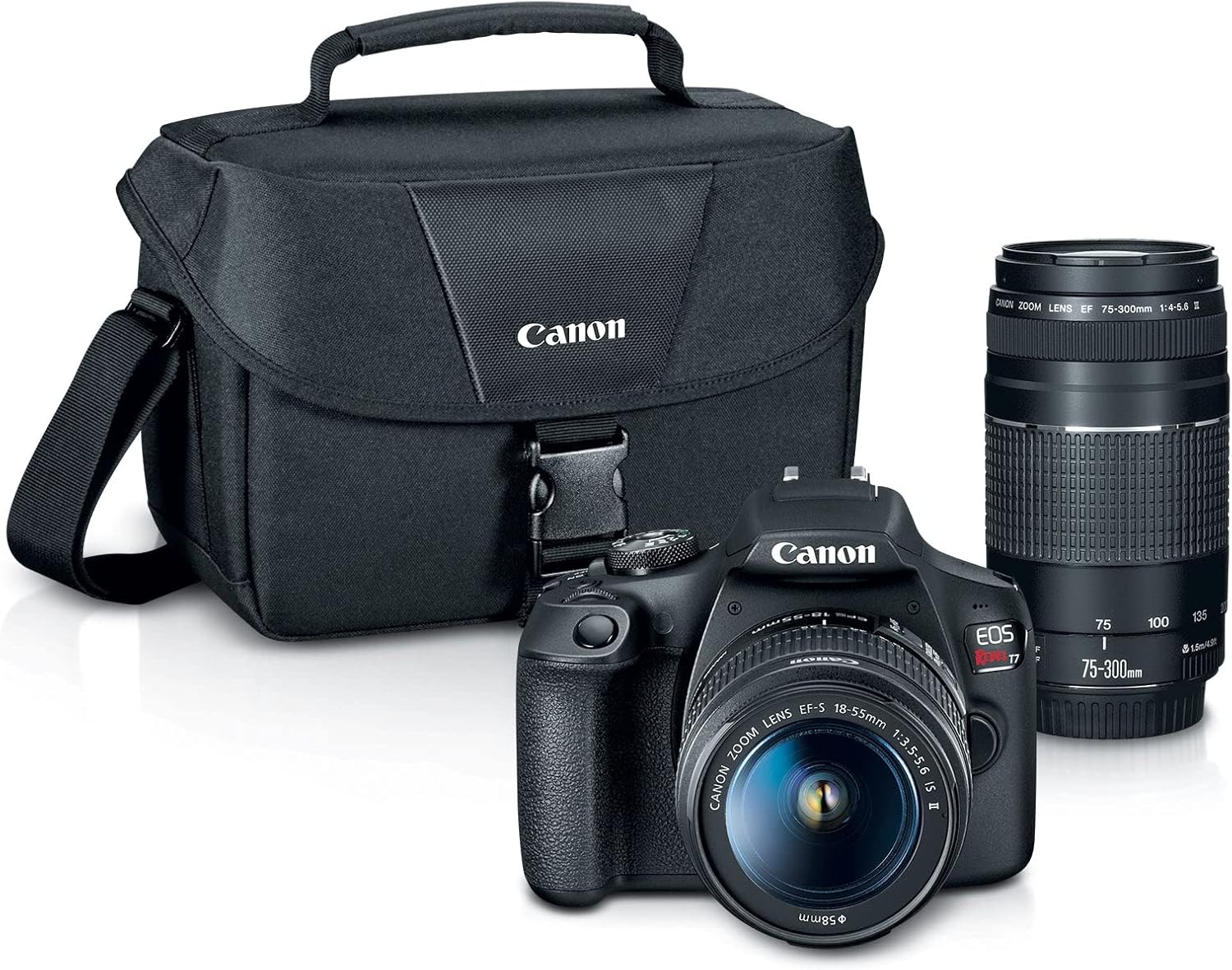
9.4/10Excellent | Canon EOS Rebel T7 DSLR: Configured as a Double Zoom Lens Kit with EF-S 18-55mm and EF 75-300mm lenses, this 24.1-megapixel package suits entry-level creators who require an expansive focal range out of the box for general and telephoto photography rather than the high-speed 8 fps continuous burst capability of the D7500. View listing |
 Choose The Best Brand8K Digital Cameras for Photography, 2026 Autofocus 88MP WiFi Professional Photography Camera… |
8.4/10Good | 8K Digital Cameras for Photography: Promoted as an 88MP WiFi camera with dual-lens capture for YouTube, 16X digital zoom, touch screen, and dual batteries, this unit caters to casual vloggers and content creators who prioritize lightweight video accessories and simplified fixed-mount operations over a professional interchangeable-lens DSLR ecosystem. View listing |
Scores are out of 10, based on listed specifications and buyer feedback. Prices are the ones on the listing when this page was written.
FAQ
How fast is the Nikon D7500 continuous shooting mechanism?
The Nikon D7500 continuous shooting engine achieves burst rates up to 8 frames per second. This rapid mechanical shutter drive is supported by high-speed image processing, making it well-equipped for capturing peak action during sporting events and wildlife expeditions.
What video recording modes are supported on the Nikon D7500?
The camera supports in-camera 4K Ultra HD and 1080p Full HD video recording with stereo sound. It also features power aperture control for smooth exposure transitions during takes, auto ISO support, and 4K UHD time-lapse generation.
Does the listing include lens hardware or accessories?
The listing is for the Nikon D7500 DX-Format Digital SLR Body only. It does not include an attached lens, and the listing does not specify bundled accessories such as memory cards, extra batteries, or external chargers.
What are the operating temperature and environmental limits?
The camera is rated for operation in ambient temperatures ranging from 0 °C to 40 °C (32 °F to 104 °F) with a relative humidity level of 85 percent or less, provided there is no condensation.
What autofocus layout does the Nikon D7500 use?
The camera utilizes a 51-point autofocus system incorporating 15 cross-type sensors for enhanced horizontal and vertical contrast detection, along with Group Area AF for improved tracking of fast, unpredictable subjects.
More Cameras & Drones ratings
See the section
BioGuard Stabilizer 100: Practical Assessment for Pool Owners
If your outdoor swimming pool rapidly depletes its sanitizer levels on bright days, adding BioGuard Stabilizer 100 provides the chemical defense needed to stop…

Nikon D3400 Bundle Review: Practical Decision Guide
Professionals, workplace content coordinators, and creators looking for an out-of-the-box DSLR package frequently evaluate the Nikon D3400 to determine whether an all-inclusive bundle solves…

Mathews Bridge-Lock Stabilizer: Practical Field Evaluation
Deciding whether to invest in the Mathews Bridge-Lock Stabilizer depends entirely on whether your archery setup takes advantage of modern riser pass-through architecture. Unlike…

Olympus LI-50B Battery: Decisive OEM Replacement Guide
When bringing a legacy compact camera back into active service, securing an authentic Olympus LI-50B battery pack provides immediate peace of mind. Sourcing an…

Olympus Stylus Tough 8010: Essential Rugged Camera Analysis
Evaluating whether a dedicated compact camera belongs on a modern job site requires looking past touchscreens and wireless gimmicks to focus strictly on physical…
Get new ratings by email
A weekly digest of the products added to the ratings pages.