Mathews Bridge-Lock Stabilizer: Practical Field Evaluation
Deciding whether to invest in the Mathews Bridge-Lock Stabilizer depends entirely on whether your archery setup takes advantage of modern riser pass-through architecture. Unlike conventional stabilizing rods that thread into a standard…
By Brian Carver 8 min read

Mathews Bridge-Lock Stabilizer
Mathews
Good
Our score: 8.0/10
Scores are out of 10, based on listed specifications and buyer feedback.
- Specs listed
- 10
- Section
- Cameras & Drones
Check price on Amazon We may earn a commission if you buy through this link.
As Amazon Associates, we earn from qualifying purchases. This means we may receive a small commission at no extra cost to you if you click through and make a purchase.
Deciding whether to invest in the Mathews Bridge-Lock Stabilizer depends entirely on whether your archery setup takes advantage of modern riser pass-through architecture. Unlike conventional stabilizing rods that thread into a standard front bushing, this purpose-built stabilizer slides directly through the riser itself. The direct interface creates a unified mechanical connection that eliminates the need for external quick-disconnect brackets or bulky mounting hardware. For archers who demand a rigid front setup capable of stiffening the entire platform and eliminating forward connection slop, this direct-fit design delivers an immediate structural upgrade.
In this detailed Mathews bridge lock stabilizer review, we examine the mechanical attributes, harmonic adjustability, and overall field utility of this direct-to-riser design. We analyze how the bridge lock stabilizer 10 inch configuration influences dynamic balance, inspect the official Mathews bridge-lock stabilizer specs, and assess the functional benefits of the patent pending InterLink Weight Technology. This guide covers riser integration, adjustability in the field, weight characteristics, and value comparisons to help you decide if this system belongs on your hunting or target bow.


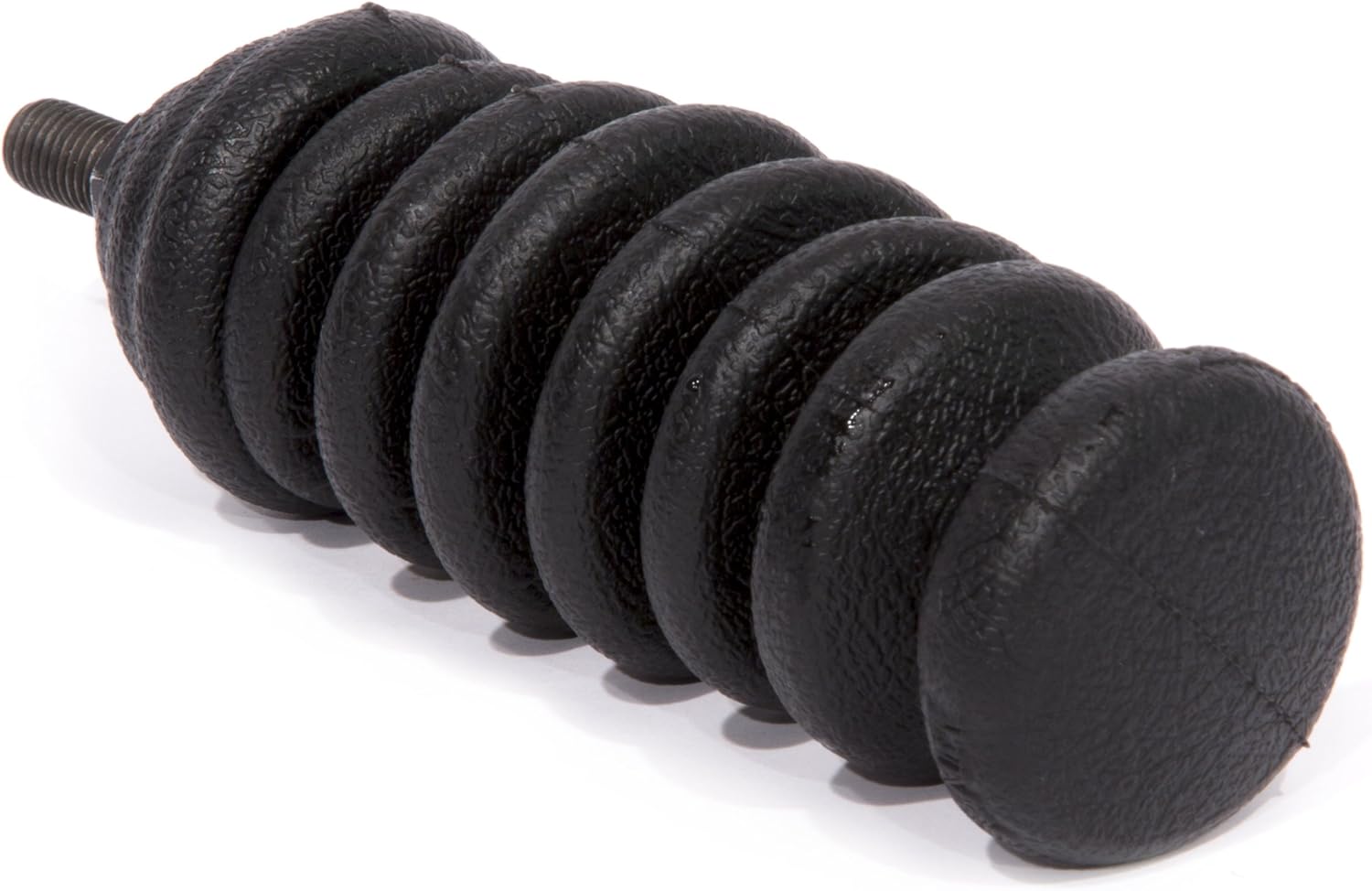

What You Get With the Mathews Bridge-Lock Stabilizer
The package provides a streamlined stabilization package built specifically for direct installation into compatible Mathews bow risers, avoiding unnecessary brackets or threaded adapters.
In the box
- Rigid aluminum stabilizer bar featuring Mathews Bridge-Lock Technology
- Direct-to-riser mounting architecture for improved connection rigidity
- Patent pending InterLink Weight Technology integration for harmonic tuning
- Quick-disconnect adjustment knob supporting 1/2-inch incremental travel
- Dedicated mounting bolt designed for secure riser clamping
- Factory one-year manufacturer warranty coverage
Key Specifications
| Brand | MATHEWS |
|---|---|
| Model Name | Bridge-lock Stabilizer |
| Stabilizer Material | Rigid Aluminum |
| Package Dimensions | 10 x 2 x 2 inches |
| Package Weight | 16 ounces |
| Finish Color | Earth (Listing title indicates Bottomlands) |
| Incremental Adjustability | 1/2-inch increments via quick-disconnect knob |
| Suggested Users | Unisex-adult |
| Included Components | Stabilizer and bolt |
| Warranty | 1 year warranty |
All 14 attributes from the listing
| Item Package Dimensions L x W x H | 10 x 2 x 2 inches |
|---|---|
| Package Weight | 16 ounces |
| Brand Name | MATHEWS |
| Warranty Description | 1 year warranty |
| Model Name | Bridge-lock Stabilizer |
| Color | Earth |
| Material | Aluminum |
| Suggested Users | unisex-adult |
| Number of Items | 1 |
| Manufacturer | Mathews |
| Included Components | stabilizer and bolt |
| ASIN | B0CVR17R8V |
| Best Sellers Rank | #408,498 in Sports & Outdoors (See Top 100 in Sports & Outdoors) #250 in Archery Stabilizers |
| Date First Available | February 15, 2024 |
Figures as published by the manufacturer on the Amazon listing.
Direct Riser Integration and Structural Rigidity
The primary advantage of the Mathews riser integrated stabilizer centers on how it eliminates mechanical flex at the mounting point. Traditional archery stabilizers attach to a 5/16-24 threaded steel or brass bushing pressed into the lower face of the riser. Under dynamic release forces, that single-point junction experiences substantial rotational and lateral torque. Any play or flex in external quick-disconnect adapters magnifies pin float and allows unwanted oscillation before the arrow leaves the string. In contrast, the Bridge-Lock system passes through the riser body, distributing stress across a wider structural surface area and locking down with a dedicated mounting bolt.
By recessing the stabilizer interface within the machined aluminum riser cutout, the connection becomes significantly stiffer than standard modular assemblies. The rigid aluminum stabilizer bar effectively acts as a direct structural extension of the riser frame. Archery creators who mount capture equipment such as a smallrig universal phone cage understand that minimizing flex at the primary bracket is the only way to eliminate unwanted vibration, and the exact same mechanical principle applies to high-performance bow balance. The direct clamping mechanism secures the bar firmly in place, resisting vibrational loosening even after thousands of shot cycles.
Comparing a bridge lock vs traditional stabilizer setup also reveals clear spatial benefits. External quick-detach brackets generally add between one and two inches of non-functional length forward of the bow grip, shifting the mechanical pivot point further out. The direct pass-through cutout allows the primary mounting body to sit flush against the bow, creating an exceptionally clean aesthetic while maximizing the structural stiffness of the overall archery system.
Harmonic Tuning and InterLink Weight Technology
Achieving a level, steady sight picture requires precise control over both mass distribution and vibrational frequency. The Mathews Bridge-Lock Stabilizer incorporates patent pending InterLink Weight Technology, enabling fine-grained harmonic tuning directly on the bar. When compound bows release stored energy, high-frequency resonance travels down the riser toward the accessory ports. A stabilizer must not only provide rotational inertia to resist bow torque, but it must also dissipate residual resonance before it transmits into the shooter’s hand.
The key functional feature of this system is the integrated quick-disconnect knob, which allows archers to adjust the bar forward or backward in distinct 1/2-inch increments. Rather than having to unscrew heavy end weights or insert modular carbon extension rods to alter center-of-gravity dynamics, you can loosen the mechanical knob and shift the aluminum bar along its pass-through track. This rapid adjustment mechanism lets shooters dial in pin settle speed during practice sessions without carrying specialized hex keys or disassembling threaded weight stacks in the field.
This level of modular travel transforms the bar into a dedicated Mathews bow balance stabilizer. Fine adjustments of half an inch allow archers to counterbalance heavy sight bars, quiver brackets, or arrow rests with precision. By moving the effective mass closer to or farther from the riser throat, archers can fine-tune down-range bubble balance, steady crosshair drift, and dampen lingering hand shock with minimal effort.
Balance Dynamics and Practical Handling for Hunting
Carrying a bridge lock stabilizer for hunting requires evaluating both stabilizing leverage and spatial maneuverability. Measuring approximately ten inches in overall configuration, this bar fits squarely into the sweet spot for spot-and-stalk or treestand hunting. It provides sufficient forward leverage to slow down pin motion at extended distances while avoiding the cumbersome clearance issues common with twelve- or fifteen-inch target bars in tight timber.
Because the aluminum bar mounts directly through the center plane of the bow, it keeps the bow’s operational profile compact and streamlined. Hunters who document their hunts using mobile filming gear like the osmo mobile 6 appreciate low-profile gear that stays out of the frame and resists catching on branches while navigating thick cover. The Earth finish provides a muted, glare-free aesthetic that blends seamlessly into natural foliage, resisting the scrapes and scuffs common in rugged backcountry terrain.
Weight management is another critical field consideration. With an item package weight listed at 16 ounces, the assembly supplies substantial forward mass to counteract rearward string and cam weight. While the listing does not specify the standalone weight of the bare bar without packaging, the aluminum construction offers dependable heft that plants the bow firmly on target in high-wind conditions. For backcountry archers who monitor pack weight rigorously, the mass provides functional stability that justifies carrying an all-metal assembly over ultralight carbon alternatives.
Mechanical Limitations and System Compatibility Trade-Offs
While the mechanical strengths of the Bridge-Lock system are substantial, compatibility represents its single biggest limitation. This stabilizer is built specifically for compound bows engineered with the proprietary Mathews Bridge-Lock cutout. If you shoot a bow from another brand or an older Mathews model lacking the precision-machined pass-through slot, this stabilizer physically cannot be mounted. It does not utilize standard 5/16-24 threaded studs, meaning it cannot serve as a universal accessory across multiple bow setups.
Another trade-off stems from the rigidity of a fixed straight-bar design. Unlike modular multi-axis offset bars or side-bar brackets, this unit operates along a single straight axis through the riser face. While you can adjust length in 1/2-inch increments, you cannot cant the bar downward or angle it laterally to offset a heavy sight or quiver without adding secondary external adapters. Archers seeking aggressive down-and-out counterweights will still need to run an independent rear sidebar system to handle lateral tilt.
Finally, the aluminum construction carries different acoustic and vibration damping qualities than layered carbon fiber composites. While aluminum delivers maximum structural stiffness and precise machining tolerances, un-damped metal can occasionally resonate differently than resin-impregnated weave. Mathews combats this using their InterLink weight geometry, but shooters accustomed to soft rubber dampening systems will notice a distinctly firm, rigid feel at the shot.
Mathews Bridge-Lock Stabilizer Pros and Cons
Pros
- Direct-to-riser Bridge-Lock mounting eliminates external adapter flex
- Rigid aluminum build provides maximum structural connection stiffness
- Quick-disconnect knob enables rapid half-inch incremental adjustments
- InterLink Weight Technology supports customizable harmonic balance
- Low-profile pass-through design prevents snags in thick brush
Cons
- Strictly requires a compatible Mathews Bridge-Lock bow riser
- Lacks lateral or downward multi-axis angle adjustability
- Total package weight of 16 ounces adds noticeable mass
Check Mathews Bridge-Lock Stabilizer on Amazon
Is the Mathews Bridge-Lock Stabilizer Worth It
Evaluating whether is Mathews bridge-lock stabilizer worth it depends entirely on your current bow platform and shooting objectives. If you already shoot a Bridge-Lock-equipped Mathews bow, this stabilizer provides an integrated fit and finish that aftermarket threaded stabilizers cannot replicate. Eliminating external quick-disconnect brackets yields a noticeably stiffer riser connection, simplifies travel packing, and creates an uncluttered sight window that performs exceptionally well in hunting blinds and open country alike.
For dedicated bowhunters who value rapid micro-adjustability, the ability to shift bar depth in 1/2-inch increments via the quick-disconnect knob is a major workflow upgrade. You can alter front-end balance on the fly to match varying quiver weights without wrestling with thread-locking compound or carrying extra allen wrenches into the field. The solid aluminum build and one-year warranty give assurance that the unit will handle heavy backcountry abuse without stripping or loosening.
Conversely, if your setup requires universal cross-compatibility across multiple bow brands, or if you strictly prefer lightweight woven carbon rods with modular side-angle mounts, this system may feel overly restrictive. It is an optimized, platform-specific component engineered specifically for modern Mathews shooters who want zero-tolerance structural rigidity and quick harmonic tuning from a clean, single-bar configuration.
Other Options to Consider
| Model | Our score | Why it is here |
|---|---|---|
 MathewsMATHEWS Bridge-Lock Stabilizer 10" BottomlandsReviewed here |
8.0/10Good | The model reviewed on this page. View listing |
 XxiaojunBow Stabilizer, Archery Bow Stabilizer for Compound Bow Carbon Balance Bar Absorber… |
9.8/10Excellent | Bow Stabilizer suits budget-conscious archers seeking a universal carbon balance bar with sound and vibration absorption weights that mounts to any standard 5/16-inch compound bow bushing rather than requiring a dedicated riser cutout. View listing |
 Limb SaverLimbSaver S-Coil Bow Stabilizer, 4-1/2 Inches |
9.2/10Very good | LimbSaver S-Coil Bow Stabilizer is the better choice for hunters operating out of tight ground blinds who prioritize an ultra-compact 4-1/2-inch rubber dampener over mechanical forward leverage and micro-adjustable tuning. View listing |
 SunyasportsSUNYA Archery Bow Stabilizer for Compound Bow, Carbon Fiber Body Flexible Core,… |
9.2/10Very good | SUNYA Archery Bow Stabilizer caters to compound shooters who want modular carbon fiber flexibility with damping systems and weight kits available across multiple lengths including 8, 10, 12, and 15 inches for standard threaded risers. View listing |
Scores are out of 10, based on listed specifications and buyer feedback. Prices are the ones on the listing when this page was written.
FAQ
What bows are compatible with the Mathews Bridge-Lock Stabilizer?
This stabilizer is designed exclusively for compound bows featuring the proprietary Mathews Bridge-Lock cutout machined into the riser. It does not thread into standard front accessory bushings found on universal compound bows.
How does the quick-disconnect knob adjust the stabilizer?
The integrated quick-disconnect knob loosens the clamping mechanism, allowing the stabilizer bar to slide forward or backward through the riser in discrete 1/2-inch increments for rapid balance and harmonic tuning.
What material is used to construct this stabilizer?
The listing specifies that the stabilizer is manufactured from rigid aluminum, providing structural stiffness and durability with an Earth finish.
What components are included in the package?
The package includes one unisex-adult stabilizer bar and the dedicated clamping bolt necessary to secure the assembly directly inside the bow riser.
What warranty coverage comes with the Mathews Bridge-Lock Stabilizer?
The manufacturer includes a 1-year warranty covering manufacturing defects and material craftsmanship from the date of purchase.
More Cameras & Drones ratings
See the section
DJI Mini 2 Review: The No-Nonsense Verdict for On-the-Go Creators
If you need a reliable aerial camera that deploys in seconds without bogging down your travel kit or triggering regulatory paperwork, the DJI Mini…
Buyer favourite Scored 9.0+/10

Nikon D200 Camera: Decisive Review for Serious Photographers
The Nikon D200 camera occupies an enduring place in digital photography, representing a rugged bridge between consumer SLR models and flagship studio workhorses. Designed…

BioGuard Stabilizer 100: Practical Assessment for Pool Owners
If your outdoor swimming pool rapidly depletes its sanitizer levels on bright days, adding BioGuard Stabilizer 100 provides the chemical defense needed to stop…

Nikon D3400 Bundle Review: Practical Decision Guide
Professionals, workplace content coordinators, and creators looking for an out-of-the-box DSLR package frequently evaluate the Nikon D3400 to determine whether an all-inclusive bundle solves…

Olympus LI-50B Battery: Decisive OEM Replacement Guide
When bringing a legacy compact camera back into active service, securing an authentic Olympus LI-50B battery pack provides immediate peace of mind. Sourcing an…
Get new ratings by email
A weekly digest of the products added to the ratings pages.