Nikon D200 Camera: Decisive Review for Serious Photographers
The Nikon D200 camera occupies an enduring place in digital photography, representing a rugged bridge between consumer SLR models and flagship studio workhorses. Designed for dedicated amateurs and business professionals who demand…
By Brian Carver 9 min read

Nikon D200
Nikon
Good
Our score: 8.4/10
Scores are out of 10, based on listed specifications and buyer feedback.
- Specs listed
- 10
- Section
- Cameras & Drones
Check price on Amazon We may earn a commission if you buy through this link.
As Amazon Associates, we earn from qualifying purchases. This means we may receive a small commission at no extra cost to you if you click through and make a purchase.
The Nikon D200 camera occupies an enduring place in digital photography, representing a rugged bridge between consumer SLR models and flagship studio workhorses. Designed for dedicated amateurs and business professionals who demand mechanical reliability and direct tactile control, this digital SLR combines a 10.2-megapixel APS-C sensor with physical ergonomics derived from professional camera systems. In this complete kit configuration, the body is paired with the 18-70mm AF-S DX f/3.5-4.5G IF-ED Nikkor Zoom Lens, providing an adaptable optical range for general documentary and field photography. If you are evaluating whether this classic DSLR fits into a modern photographic workflow, understanding its strengths and technical boundaries is essential.
Investing in this system today means appreciating the distinct handling characteristics of a dedicated CCD sensor and optical pentaprism system. Unlike contemporary mirrorless alternatives such as the nikon z 30 body that emphasize electronic displays and compact dimensions, the D200 provides a heavy-duty, tactile shooting experience rooted in traditional SLR operation. In this comprehensive review, we evaluate the magnesium alloy chassis, imaging characteristics, optical viewfinder clarity, continuous burst speeds, and landscape capabilities of this platform. By examining the manufacturer specifications and functional design, this guide delivers a clear recommendation to help you decide if the D200 suits your creative needs.



What You Get With the Nikon D200
The Nikon D200 kit arrives as a self-contained photographic system centered on an interchangeable lens body and an all-purpose standard zoom optic. Based on the manufacturer listing, the package provides the following key hardware elements and integrated capabilities:
In the box
- Nikon D200 digital SLR camera body with rugged magnesium alloy chassis
- 18-70mm AF-S DX f/3.5-4.5G IF-ED Nikkor Zoom Lens for wide to telephoto shooting
- Eye-level optical viewfinder system delivering 0.94x magnification
- Continuous shooting mechanism reaching up to 5 frames per second
- Integrated dual image stabilization for steady handheld shooting
- 2.5-inch LCD monitor featuring wide 170-degree off-axis viewing angles
- Selectable capture modes supporting both JPEG and uncompressed RAW files
- Versatile shooting modes including Manual, Automatic, Portrait, Landscape, Sports, Macro, and Custom
Key Specifications
| Photo Sensor Resolution | 10.2 Megapixels |
|---|---|
| Photo Sensor Type | CCD |
| Sensor Size and Aspect Ratio | APS-C with 4:3 Aspect Ratio |
| Viewfinder Type and Magnification | Optical with 0.94x Magnification |
| Continuous Burst Speed | 5 Frames Per Second |
| Minimum Shutter Speed | 0.000125 Seconds |
| Rear Screen Size and Viewing Angle | 2.5-Inch LCD with 170-Degree Viewing |
| Expanded Minimum Sensitivity | ISO 100 |
| Video Resolution | 1080p (per listing specification) |
| Compatible Mountings | Nikon 1 (per listing specification) |
All 85 attributes from the listing
| Compatible Mountings | Nikon 1 |
|---|---|
| Aspect Ratio | 4:3 |
| Sensor Type | CCD |
| File Format | JPEG, RAW |
| Image stabilization | Dual |
| Expanded ISO Minimum | 100 |
| Photo Sensor Resolution | 10.2 mp |
| Photo Sensor Size | APS-C |
| Minimum Shutter Speed | 0.000125 seconds |
| Exposure Control | Automatic |
| Form Factor | DSLR |
| Effective Still Resolution | 10.2 mp |
| Special Feature | Lightweight |
| Color | Black |
| Screen Size | 2.5 inches |
| Shooting Modes | Automatic, Custom, Landscape, Macro, Manual, Portrait, Shutter Priority, Sports |
| Video Resolution | 1080p |
| Viewfinder | Optical |
| Flash Modes | Auto, On, Off, Slow Synch |
| Camera Flash | external |
| Skill Level | Amateur, Professional |
| Specific Uses For Product | Photography |
| Compatible Devices | Nikon F Mount |
| Continuous Shooting | 5 frames per second |
| Aperture modes | A, M, P |
| Viewfinder Magnification | 0.94x |
| Flash Sync Speed | 1/250 sec |
| Video Capture Format | AVI |
| Expanded ISO Maximum | 1600 |
| Battery Weight | 1 g |
| Connectivity Technology | USB |
| Wireless Technology | Yes |
| Total USB Ports | 1 |
| Total USB 2.0 Ports | 1 |
| Display Type | LCD |
| Dots Per Screen | 230,000 dots |
| Display Fixture Type | Fixed |
| Display Resolution Maximum | 320×240 |
| Flash Memory Type | SD, SDHC |
| Memory Slots Available | 1 |
| Write Speed | 5 fps |
| Flash Memory Speed Class | C6 |
| Flash Memory Bus Interface Type | PATA |
| Flash Memory Supported Size Maximum | 2 GB |
| JPEG Quality Level | Normal |
| Supported Image Format | JPEG, RAW |
| Bit Depth | 14 Bit |
| Total Still Resolution | 10.2 mp |
| Maximum Image Size | 10.2 mp |
| Maximum Focal Length | 7 centimeters |
| Optical Zoom | 3.8 x |
| Lens Type | interchangeable |
| Zoom | Optical Zoom |
| Camera Lens | Nikon F Mount 18-70mm f/3.5-4.5G IF-ED Nikkor Zoom Lens with a 3.8 multiplier x optical zoom and a maximum focal length of 105 millimeters |
| Minimum Focal Length | 18 millimeters |
| Real Angle Of View | 8.1 degrees |
| Focal Length Description | 18-70 Millimeters |
| Number of Diaphragm Blades | 7 |
| Lens Construction | bayonet mount |
| Metering Methods | Center Weighted, Evaluative |
| White Balance Settings | Auto |
| Self Timer | 10 seconds |
| Brand | Nikon |
| Model Name | D200 |
| Built-In Media | Battery |
| Model Number | 9993 |
| Model Series | D200 |
| Series Number | 200 |
| Global Trade Identification Number | 00018208099931 |
| UPC | 018208099931 |
| Manufacturer | Nikon |
| Manufacturer Part Number | 9993 |
| Best Sellers Rank | #297,391 in Electronics (See Top 100 in Electronics) #433 in DSLR Cameras |
| ASIN | B000CRX6YI |
| Digital Scene Transition | zoom |
| Image Capture Type | Stills |
| Auto Focus Technology | Contrast Detection |
| Focus Features | Contrast Detection Autofocus |
| Autofocus Points | 11 |
| Focus Type | Auto Focus |
| Focus Mode | Continuous-Servo AF (AF-C) |
| Photo Sensor Technology | CCD |
| Supported File Format | JPEG, RAW |
| Image Stabilization | Dual |
| Metering Description | Center Weighted, Evaluative |
Figures as published by the manufacturer on the Amazon listing.
Nikon D200 Build Quality and Magnesium Alloy Chassis
A primary highlight of the camera is the nikon d200 magnesium alloy body. Engineered with a rugged, lightweight magnesium alloy chassis and exterior shell, this structure protects internal mirrors, sensitive electronics, and optical mechanisms from demanding working environments. Photographers accustomed to modern plastic consumer bodies will immediately appreciate the rigid, dense structural feel. The manufacturer notes that the D200 incorporates design elements from top-tier professional bodies, ensuring exceptional mechanical resilience whether shooting in dusty outdoor fields or controlled indoor environments.
Tactile handling stands out as a core benefit of the nikon d200 build quality. Unlike entry-level compact options such as the nikon coolpix 2000 that rely on simplified plastic construction and menu-heavy adjustments, the D200 utilizes dual control dials and dedicated physical buttons. This allows operators to quickly modify exposure compensation, autofocus selection, and metering parameters without taking their eye from the finder. The sculpted, textured handgrip provides a reassuring hold, balancing mid-range zoom lenses comfortably during extended shooting assignments.
The structural rigidity also contributes directly to shot stability. While modern lightweight cameras can be susceptible to micro-vibrations from hand movements, the substantial heft of this metal chassis provides natural dampening during exposures. Shutter mechanisms and mirror balances operate with a confident, damped mechanical sound. For professionals who require a dependable backup camera that can survive demanding field use, the magnesium alloy construction ensures the body remains durable across years of active duty.
Nikon D200 CCD Sensor and Imaging Performance
The core imaging capability of the platform is centered on the 10.2-megapixel nikon d200 ccd sensor. In an era dominated by CMOS sensors, CCD imaging cores continue to attract dedicated practitioners due to their unique color science and rich tonal depth. Images captured with this sensor display distinctive color saturation, producing natural skin tones, vibrant vegetation, and deep blue skies straight out of the camera. Backed by the expanded ISO minimum of 100, the sensor captures remarkably clean details and smooth gradients across highlight and shadow zones.
Understanding the nikon d200 specs is crucial for mastering its exposure characteristics. The sensor captures both compressed JPEG images for rapid review and uncompressed RAW files for extensive post-capture latitude. Because CCD architecture has narrower highlight latitude than modern sensors, careful exposure metering is necessary to avoid blown highlights in high-contrast scenes. Using the camera’s multiple exposure modes, including Manual and Custom presets, photographers can calibrate metering to retain delicate textural details in clouds, reflective surfaces, and bright ambient highlights.
The sensor is complemented by dual image stabilization listed in the product specifications, aiding sharpness during handheld captures at slower shutter speeds. The shutter system also supports an ultra-fast minimum speed of 0.000125 seconds, allowing wide-aperture photography in harsh daylight. While the CCD sensor produces fine, grain-like noise at higher sensitivity settings, keeping the camera at its base ISO 100 produces clean, vibrant images that rival modern sensors in daylight punch and color distinction.
Nikon D200 Optical Viewfinder and Response Speed
Composing through the nikon d200 optical viewfinder offers a bright, immediate optical experience that electronic displays struggle to duplicate. Featuring 0.94x magnification, this eye-level glass pentaprism viewfinder delivers a large, clear view of the frame with zero lag or digital refresh delay. The generous magnification makes critical focusing intuitive, enabling photographers to spot subtle compositional flaws, subject movement, and depth-of-field variations in real time before triggering the shutter.
Responsiveness is another defining attribute of this platform. The camera features an instant power-up capability and a rapid shutter release mechanism, ensuring that the system is ready to record the moment you depress the shutter button. Combined with a continuous shooting speed of 5 frames per second, the D200 handles fast-paced photographic assignments, candid documentary work, and action sequences with steady mechanical precision. Dedicated Sports and Shutter Priority shooting modes optimize these high-speed capabilities for moving subjects.
Image verification in the field relies on the rear 2.5-inch LCD monitor. Although modest in dimensions compared to modern touchscreens, the screen offers an ultra-wide 170-degree viewing angle, allowing clear playback inspection from high or low angles. Navigating playback menus and verifying exposure histograms is responsive, enabling quick confirmations between continuous bursts. The combination of an expansive optical finder, 5 fps continuous drive, and instant operational response establishes an engaging, highly dependable shooting cadence.
Nikon D200 for Landscape Photography Performance
Deploying the nikon d200 for landscape photography highlights the sensor’s strengths when paired with deliberate outdoor technique. When mounted to a solid tripod and set to base ISO 100, the camera produces landscape images with exceptional clarity, crisp micro-contrast, and realistic color depth. The CCD sensor excels at separating subtle hues in foliage, rock faces, and water reflections. While fixed-lens point-and-shoot superzooms like the nikon coolpix l820 offer wide zoom ratios in compact packages, they lack the raw sensor depth, dynamic resolution, and interchangeable optical versatility of the D200 system.
The included 18-70mm AF-S DX f/3.5-4.5G IF-ED Nikkor Zoom Lens provides an ideal focal range for outdoor terrain. At the 18mm wide-angle end, scenic horizons and expansive valleys are captured with sweeping perspective, while zooming into the 70mm telephoto range isolates distant ridge lines and natural patterns. The extra-low dispersion (ED) glass elements help minimize chromatic aberrations along high-contrast tree lines and horizon transitions, ensuring fine details remain sharp throughout the APS-C frame.
Outdoor field work also benefits from the camera’s rugged weather-resistant chassis and flexible exposure options. Landscape photographers can utilize dedicated Landscape shooting modes or switch to full Manual control to execute precise hyperfocal distance setups. The minimum shutter speed of 0.000125 seconds gives operators the ability to freeze fast-moving rivers or foliage in bright sun, while longer exposures on a tripod capture velvety water motion. For nature photographers seeking rich, filmic color rendition without digital post-processing gimmicks, the D200 remains an exceptional landscape tool.
Nikon D200 Pros and Cons
Pros
- Rugged magnesium alloy chassis and exterior body
- Responsive 5 frames per second continuous shooting
- Large eye-level optical viewfinder with 0.94x magnification
- Rich color capture from 10.2MP CCD sensor
- Instant power-up and fast shutter release response
Cons
- Minimum expanded sensitivity limited to ISO 100
- Compact 2.5-inch rear LCD monitor
- Modest 10.2MP resolution for extensive cropping
Is the Nikon D200 Worth It
Determining whether the Nikon D200 is worth your investment comes down to your operational preferences and aesthetic goals. If you value an indestructible magnesium alloy chassis, immediate mechanical response, a 0.94x optical viewfinder, and the organic color rendering of a 10.2-megapixel CCD sensor, this camera offers superb photographic satisfaction. It excels in controlled studio lighting, daylight documentary projects, and tripod-mounted scenic work where base ISO 100 can be maintained.
Conversely, photographers who require high-ISO performance for dim indoor events or automated video tracking will find modern mirrorless options more suitable. If your priority is extreme optical reach for wildlife without carrying interchangeable glass, bridge platforms like the nikon p1100 camera provide an all-in-one alternative. Furthermore, while the Amazon product data lists 1080p video, the D200 is primarily an optical stills camera, making dedicated video cameras a better choice for vloggers.
For purists, students of photography, and professionals seeking a rugged, secondary daylight workhorse, the D200 provides unmatched tactile quality and distinctive CCD color science. Its dependable shutter, ergonomic command dials, and durable metal construction deliver an authentic photographic experience that holds up remarkably well for focused still imaging.
Other Options to Consider
| Model | Our score | Why it is here |
|---|---|---|
 NikonNikon D200 10.2MP Digital SLR Camera with 18-70mm AF-S DX f/3.5-4.5G IF-ED…Reviewed here |
8.4/10Good | The model reviewed on this page. View listing |
 CanonCanon EOS Rebel T7 DSLR Camera EF-S 18-55mm f/3.5-5.6 is II Lens… |
9.2/10Very good | 24.1 Megapixel CMOS suits beginner photographers who want higher resolution, modern CMOS low-light flexibility, Full HD video capabilities, and built-in Wi-Fi connectivity for quick image sharing. Paired with an EF-S 18-55mm f/3.5-5.6 IS II lens, this Canon EOS Rebel T7 configuration is a lighter, consumer-friendly alternative to the heavier, professional-style metal build of the D200. View listing |
 CanonCanon EOS Rebel T7 DSLR Camera Double Zoom Lens Kit with EF-S… |
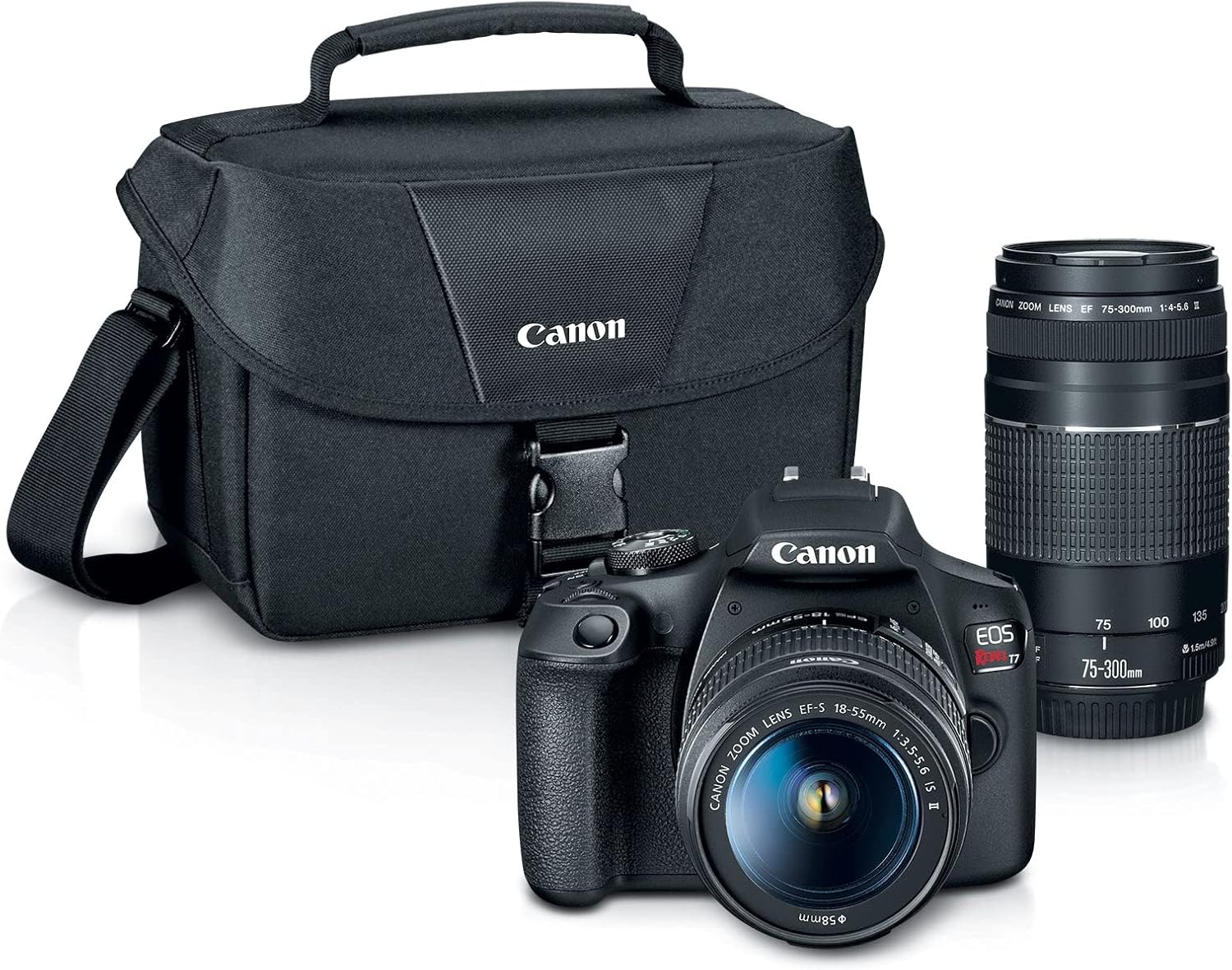
9.4/10Excellent | Canon EOS Rebel T7 DSLR provides an excellent solution for photographers who need dual-lens versatility right out of the box, combining an EF-S 18-55mm standard zoom and an EF 75-300mm telephoto zoom. For users who prioritize extended telephoto reach for wildlife, sports, and wireless file transfers, this package offers broader focal range versatility than the D200 kit. View listing |
 Choose The Best Brand8K Digital Cameras for Photography, 2026 Autofocus 88MP WiFi Professional Photography Camera… |
8.4/10Good | 8K Digital Cameras for Photography targets multimedia content creators and vloggers who need modern video features including 8K recording, dual lenses, an 88MP sensor rating, a touch screen, 16X digital zoom, and bundled accessories like two batteries and a charging stand. While it lacks the optical pentaprism viewfinder and rugged magnesium alloy body of a classic DSLR, it provides convenient video-centric tools for social media creators. View listing |
Scores are out of 10, based on listed specifications and buyer feedback. Prices are the ones on the listing when this page was written.
FAQ
What type of sensor is inside the Nikon D200 camera?
The Nikon D200 uses a 10.2-megapixel APS-C CCD image sensor. It is widely praised for its rich, film-like color rendition, excellent daylight tonal gradation, and crisp sharpness when used at its base sensitivity of ISO 100.
Can the Nikon D200 handle continuous action photography?
Yes, the camera shoots continuous bursts up to 5 frames per second. With instant power-up response and a minimal shutter release delay, it provides the rapid mechanical speed needed for capturing active subjects and documentary moments.
What are the advantages of the Nikon D200 optical viewfinder?
The eye-level optical viewfinder features a high 0.94x magnification, delivering a large, bright, and lag-free view of your subject. This allows precise framing, natural depth perception, and critical manual focus assessment in any lighting condition.
What shooting modes does the Nikon D200 offer?
The camera features a wide range of shooting modes, including Manual, Automatic, Shutter Priority, Landscape, Portrait, Macro, Sports, and Custom settings, allowing photographers to choose between full exposure automation and precise manual control.
Which file formats are supported by the Nikon D200?
The Nikon D200 supports both compressed JPEG files for fast turnaround and uncompressed RAW files for maximum dynamic range retention and flexible post-capture color grading.
More Cameras & Drones ratings
See the section
DJI Mini 2 Review: The No-Nonsense Verdict for On-the-Go Creators
If you need a reliable aerial camera that deploys in seconds without bogging down your travel kit or triggering regulatory paperwork, the DJI Mini…
Buyer favourite Scored 9.0+/10

BioGuard Stabilizer 100: Practical Assessment for Pool Owners
If your outdoor swimming pool rapidly depletes its sanitizer levels on bright days, adding BioGuard Stabilizer 100 provides the chemical defense needed to stop…

Nikon D3400 Bundle Review: Practical Decision Guide
Professionals, workplace content coordinators, and creators looking for an out-of-the-box DSLR package frequently evaluate the Nikon D3400 to determine whether an all-inclusive bundle solves…

Mathews Bridge-Lock Stabilizer: Practical Field Evaluation
Deciding whether to invest in the Mathews Bridge-Lock Stabilizer depends entirely on whether your archery setup takes advantage of modern riser pass-through architecture. Unlike…

Olympus LI-50B Battery: Decisive OEM Replacement Guide
When bringing a legacy compact camera back into active service, securing an authentic Olympus LI-50B battery pack provides immediate peace of mind. Sourcing an…
Get new ratings by email
A weekly digest of the products added to the ratings pages.