DJI RS 4 Pro Review: Decisive Guide for Solo Creators and Production Crews
Choosing the right camera stabilization system requires balancing motor torque, physical clearance, and deployment speed. The DJI RS 4 Pro gimbal stabilizer is engineered specifically for commercial directors, documentary shooters, and independent…
By Brian Carver 9 min read

DJI RS 4 Pro
DJI
Very good
Our score: 9.2/10
Scores are out of 10, based on listed specifications and buyer feedback.
- Specs listed
- 10
- Section
- Cameras & Drones
Check price on Amazon We may earn a commission if you buy through this link.
As Amazon Associates, we earn from qualifying purchases. This means we may receive a small commission at no extra cost to you if you click through and make a purchase.
Choosing the right camera stabilization system requires balancing motor torque, physical clearance, and deployment speed. The DJI RS 4 Pro gimbal stabilizer is engineered specifically for commercial directors, documentary shooters, and independent filmmakers who run demanding camera setups. If your productions require pairing cinema bodies or fully rigged mirrorless cameras with heavy cinema primes, wireless video transmitters, and remote follow focus hardware, this platform delivers the necessary mechanical stability. In this review, we analyze what you can expect from the flagship package, detailing its capabilities on set and identifying which types of productions benefit most from its professional feature set.
Throughout this comprehensive breakdown, we examine the physical specifications, balancing mechanics, motor responsiveness, and real-world handling of this stabilization package. We explore how the automated axis locks improve turnaround times between takes, how native vertical orientation operates without awkward third-party plates, and how the included motor and transmitter streamline camera operation. We also evaluate the system alongside more compact alternatives, such as the dji rs 3 mini gimbal stabilizer, helping you determine whether this heavy-duty stabilizer matches your specific workflow needs or if a lighter stabilization platform is better suited for your production schedule.


What You Get With the DJI RS 4 Pro
The combo configuration of this gimbal stabilizer is bundled as a self-contained production ecosystem, packaging essential camera control, wireless transmission, and lens management gear inside a dedicated protective enclosure.
In the box
- DJI RS 4 Pro 3-Axis Gimbal Stabilizer
- BG30 Battery Grip
- Quick-Release Plates
- Extended Grip and Tripod Base
- Briefcase Handle
- Lens Fastening Support
- Ronin Image Transmitter
- Focus Pro Motor
- Smartphone Monitor Holder
- Camera Control Cables
- Charging and HDMI Video Cables
- Carrying Case
- DJI 1-Year Limited Warranty
Key Specifications
| Stabilization Type | 3-Axis Image Stabilization (Pan, Tilt, Roll) |
|---|---|
| Maximum Payload Capacity | 4.5 kg / 9.9 lbs |
| Display Interface | 1.8-inch OLED Touchscreen with Auto-Lock |
| Battery Runtime | Up to 13 Hours (BG30 Battery Grip) |
| Total Package Weight | 9.7 pounds |
| Folded Dimensions | 15.85 x 14.35 x 6.25 inches |
| Model Number | CP.RN.00000346.01 AZ |
| Shooting Orientations | Horizontal and 2nd-Generation Native Vertical |
| Mechanical Axis Finish | Teflon-Coated Axis Arms |
| Connectivity and Control | Bluetooth Mode Switching, USB-C, Joystick Control |
All 26 attributes from the listing
| Brand | DJI |
|---|---|
| UPC | 192223249257 |
| Global Trade Identification Number | 00192223249257 |
| Number of Items | 14 |
| Manufacturer | DJI |
| Model Name | DJI RS 4 Pro |
| Manufacturer Part Number | RS 4/RS 4 Pro |
| Model Number | CP.RN.00000346.01 AZ |
| Model Series | RS 4 Pro |
| Best Sellers Rank | #243 in Video Camera Supports & Stabilizers #256 in Professional Video Stabilizers |
| ASIN | B0D18W53NR |
| Maximum Weight Recommendation | 4.5 kg |
| Color | Black |
| Compatible Devices | Camera |
| Screen Size | 1.8 inches |
| Image stabilization | 3-axis image stabilization |
| Exposure Control Type | Manual (M) |
| File Format | MP4, MOV, AVI |
| Media Type | Video |
| Shooting Modes | Horizontal, Vertical |
| Viewfinder Type | Electronic viewfinder (EVF) |
| Water Resistance Level | Not Water Resistant |
| Video Capture Format | MP4, MOV, AVI |
| Video Capture Resolution | 4K (3840 x 2160) |
| Item Weight | 9.7 pounds |
| Folded Size | 15.85 x 14.35 x 6.25 in |
Figures as published by the manufacturer on the Amazon listing.
Payload Capacity for Cinema Rigs
A primary consideration for commercial camera operators is whether a handheld gimbal can support production-ready camera bodies. The substantial dji rs 4 pro payload capacity tops out at 4.5 kilograms, or 9.9 pounds. This structural threshold allows the unit to easily balance compact cinema camera bodies such as the Sony FX6, Canon C70, or RED Komodo, alongside fully caged hybrid mirrorless cameras outfitted with matte boxes, continuous zoom lenses, and wireless receiver units. The motor torque is tuned to compensate for extended front-heavy optical packages, preventing motor shudder and overheating during rapid panning maneuvers.
Balancing heavy cinema rigs is notoriously tedious on conventional systems, but the mechanical design of this platform minimizes balancing friction. Each mechanical arm features a smooth Teflon coating that eliminates the jerky, micro-sticking sensation common when sliding baseplates millimeter by millimeter on aluminum arms. When configuring the dji rs 4 pro for cinema cameras, fine-tuning dials allow camera assistants to adjust center-of-gravity offsets with exacting precision. This friction reduction ensures that motors spend their operating power purely on movement compensation rather than fighting internal arm resistance.
While compact consumer stabilization tools like the dji osmo mobile 8p gimbal exist strictly for lightweight mobile content, the structural build of this stabilizer is designed around rigid carbon fiber and metal alloy construction. The extra arm length provides ample physical clearance for larger camera backplates and bulky cinema batteries, ensuring that the tilt axis can sweep through dynamic low-angle transitions without the rear battery plate colliding with the roll motor housing during aggressive shots.
Setup Speed and Automated Axis Locks
Efficiency on a commercial set directly impacts production margins, making rapid hardware deployment essential. The dji rs 4 pro automated axis locks drastically reduce setup and teardown times compared to legacy stabilizers. When the unit is powered down, all three axes automatically lock into a rigid, parked position to prevent loose arms from swinging around during transport. Once you press and hold the power button, the axes instantly unlock and self-unfold into operational balance, ready to record in mere seconds.
The integrated 1.8-inch OLED touchscreen incorporates an intuitive auto-lock function that prevents accidental mode shifts or setting adjustments from stray thumb touches while executing complex camera moves. Navigating menus directly on the touchscreen allows shooters to alter motor stiffness, change joystick sensitivity, and toggle between operational profiles without needing to launch a mobile application. The streamlined dji rs 4 pro setup process enables solo operators to transition from a vehicle mount to a handheld configuration without losing their calibrated balance points.
Quick-release plates adhere to standard mounting configurations, allowing you to unclip the camera package to swap memory cards or change lens filters and clip it right back onto the stabilizer without needing to recalibrate the balance from scratch. The physical toggle switch below the touchscreen offers instant switching between Pan Follow, Pan and Tilt Follow, and FPV modes, while Bluetooth shutter connectivity eliminates dangling control cables when working with supported mirrorless camera bodies.
Focus Control and Transmission Integration
Precision focus pulling remains one of the greatest hurdles when operating moving camera rigs. The bundled dji rs 4 pro focus motor integrates directly into the gimbal chassis, delivering high-torque rotational power to manage stiff, geared cinema lenses without slipping or stalling. Operators can map the front control dial to manual lens focus or smooth zoom control, granting direct tactile authority over optical focal lengths while operating the rig single-handedly.
In addition to manual motor control, the hardware ecosystem supports advanced LiDAR focusing modules and ActiveTrack Pro functionality. When paired with the included Ronin Image Transmitter, the gimbal streams a low-latency high-definition video feed directly to mobile devices or remote monitors. This setup empowers camera assistants and directors to monitor framing remotely, pull electronic focus, and engage intelligent subject tracking from a distance, transforming solo shooting packages into coordinated multi-crew assets.
This networked focus and video architecture removes the need to cobble together third-party transmitters, bracket plates, and auxiliary power splitter cables. Because the central battery unit and accessory ports supply power and telemetry data cleanly throughout the frame, the camera rig remains uncluttered. By cutting down cable clutter, the risk of snagging wires on the gimbal motors during 360-degree Dutch roll maneuvers is completely eliminated.
Vertical Content Creation and Battery Performance
Modern commercial campaigns increasingly demand simultaneous horizontal and vertical deliverables. The dji rs 4 pro native vertical shooting system is built around a second-generation horizontal-to-vertical mounting plate mechanism. Instead of requiring third-party vertical brackets or awkward counterweights that restrict motor clearance, the operator simply unlocks the horizontal mounting base, unseats the camera plate, and locks it directly into the vertical arm interface, securing a native vertical balance in seconds.
Powering high-torque motors, motorized focus gears, and wireless video transmitters requires an immense energy reserve. The dji rs 4 pro battery life is rated for up to 13 hours of continuous operation thanks to the detachable BG30 high-capacity battery grip. Even when powering external accessories through the integrated connection ports, the battery maintains stable power delivery across extended production shifts. The grip can be recharged quickly via high-wattage USB-C fast charging protocols, reducing offline downtime between location moves.
For mobile content creators who do not manage heavy cinema payloads and simply require an ultra-portable vlogging setup, a self-contained pocket camera such as the dji pocket 2 offers an easier, pocketable form factor. However, for cinema-grade productions where high dynamic range sensors, heavy cinema glass, and flawless stabilization are non-negotiable, the RS 4 Pro provides the robust electrical and physical foundation required for long shoot days.
DJI RS 4 Pro Pros and Cons
Pros
- 5kg payload capacity for cinema rigs
- Automated axis locks speed up deployment
- Second-generation native vertical shooting
- Teflon-coated axes for smooth balancing
- Focus Pro Motor and transmitter included
- Up to 13 hours of battery life
Cons
- Substantial 9.7-pound total package weight
- Overkill for lightweight mirrorless cameras
- Requires balancing practice with heavy accessories
Is the DJI RS 4 Pro Worth It
Evaluating whether this high-end stabilization platform justifies its investment depends entirely on the size of your camera rigs and the scope of your production requirements. For commercial production houses, freelance cinematographers, and documentary crews deploying cinema bodies or fully accessorized hybrid cameras, this stabilization platform delivers exceptional value. The robust 4.5 kg payload limit, combined with automated axis locks and low-friction Teflon arms, eliminates the mechanical bottlenecks that frequently delay production schedules.
Solo operators who must deliver polished social media assets alongside traditional horizontal commercial cuts will find the second-generation native vertical switching capability invaluable. Rather than balancing two separate camera setups or compromising framing through aggressive post-production digital cropping, the hardware enables quick vertical adaptation on location. Furthermore, having the focus motor and wireless transmitter included directly in the combo kit eliminates the headache of sourcing and troubleshooting mismatched third-party accessories.
Conversely, if your kit consists primarily of lightweight, un-caged mirrorless cameras paired with compact prime lenses, investing in this heavy-duty platform may be counterproductive. The total package weight of 9.7 pounds, combined with a heavy camera build, creates substantial physical strain during prolonged handheld shooting. In such scenarios, smaller stabilization platforms designed for mid-weight mirrorless bodies provide plenty of stability with significantly less physical fatigue.
Other Options to Consider
| Model | Our score | Why it is here |
|---|---|---|
 DJIDJI RS 4 Pro Combo, 3-Axis Gimbal Stabilizer for DSLR & Cinema…Reviewed here |
9.2/10Very good | The model reviewed on this page. View listing |
 DJIDJI Osmo Mobile 7 Gimbal Stabilizer for iPhone & Android, 3-Axis Gimbal |
8.8/10Very good | Built-in Tripod: This lightweight consumer smartphone stabilizer is designed specifically for mobile creators seeking an ultra-compact footprint, offering automated tracking, guided shooting modes, and 10 hours of battery life at a tiny fraction of the weight of a dedicated cinema rig. View listing |
 DJIDJI Osmo Mobile 8 Gimbal Stabilizer for Phone, 3-Axis Stabilization |
8.6/10Good | AI Native Tracking with Audio: Built for mobile vloggers and content creators who need built-in extension rods, full 360-degree pan rotation, and integrated tracking with lighting, this smartphone stabilizer offers an all-in-one handheld solution for phone-based recording. View listing |
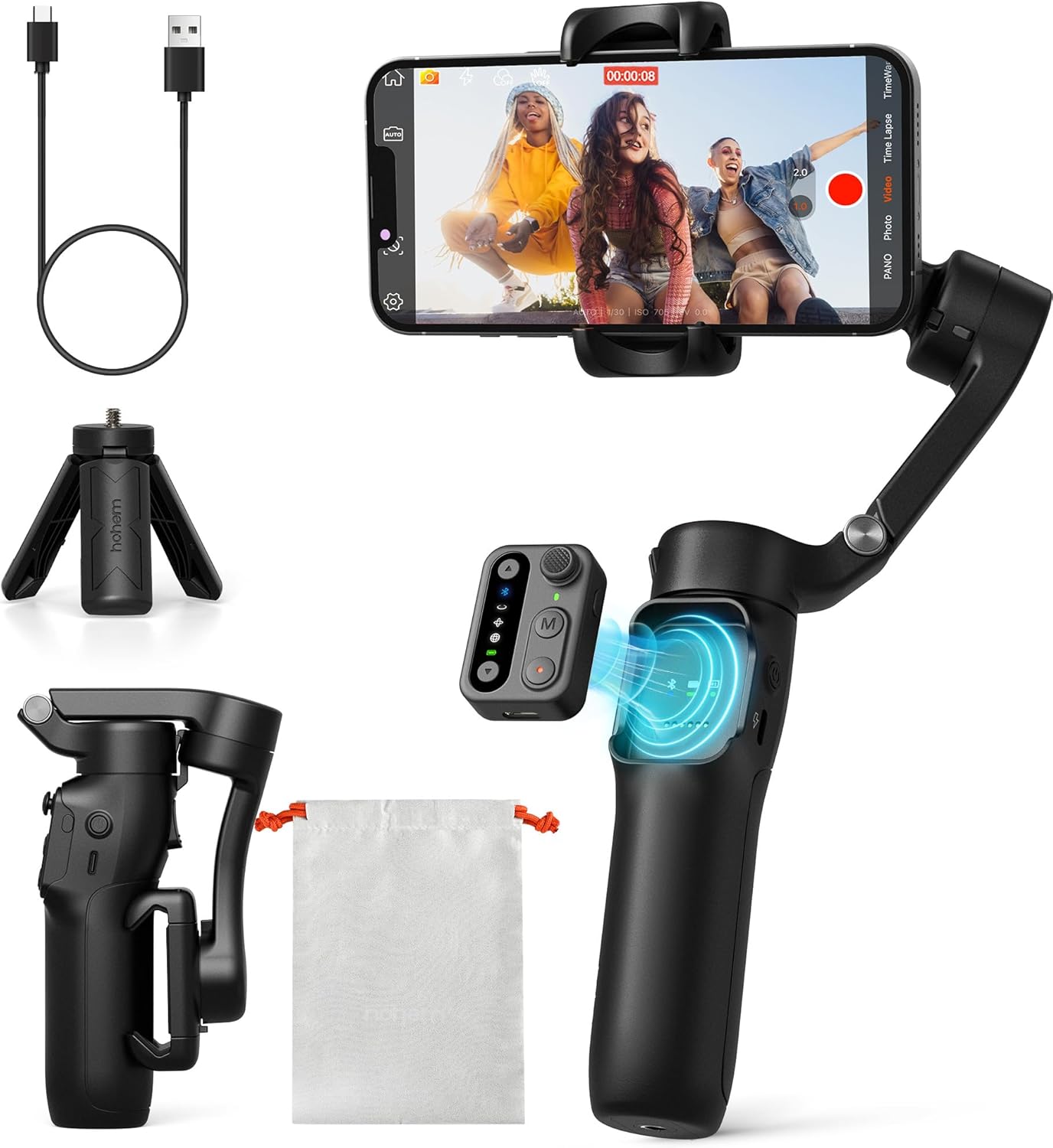
 Hohemhohem iSteady X3 SE 3-Axis Gimbal Stabilizer for iPhone & Android, Black |
8.4/10Good | Detachable Remote: Designed for entry-level smartphone videography, this foldable 0.79-pound stabilizer features a detachable wireless remote and an 11-hour battery life, making it a budget-friendly option for casual vloggers rather than commercial cinema operators. View listing |
Scores are out of 10, based on listed specifications and buyer feedback. Prices are the ones on the listing when this page was written.
FAQ
What is the maximum payload capacity of the DJI RS 4 Pro?
The gimbal supports a maximum payload capacity of up to 4.5 kilograms, or 9.9 pounds. This allows it to comfortably balance professional cinema camera bodies and heavy mirrorless camera rigs equipped with continuous zoom lenses, follow focus systems, and wireless transmitters.
How do the automated axis locks improve setup speed on set?
The automated axis locks automatically secure the pan, tilt, and roll axes when the gimbal is powered down, protecting the motor arms during transit. When you power the device on, the axes unlock and open into their balanced operating position automatically, allowing you to begin filming immediately.
Does the gimbal support native vertical shooting without third-party mounts?
Yes, the stabilizer incorporates second-generation native vertical shooting technology. The quick-release horizontal baseplate can be disengaged and mounted directly to the vertical axis arm, allowing you to switch camera orientation without purchasing additional third-party counterweights or brackets.
How long does the battery last during full production days?
The included BG30 battery grip provides up to 13 hours of operating runtime under standard conditions. Actual battery duration varies depending on the balanced weight of your camera rig, motor tuning aggressiveness, and whether you are drawing auxiliary power for external accessories like the focus motor.
What accessories are included in the RS 4 Pro Combo package?
The combo package includes the 3-axis stabilizer, BG30 battery grip, quick-release plates, extended grip tripod, briefcase handle, lens support, Ronin Image Transmitter, Focus Pro Motor, phone holder, camera control cables, charging and HDMI cables, carrying case, and a 1-year limited warranty.
More Cameras & Drones ratings
See the section
DJI Mini 2 Review: The No-Nonsense Verdict for On-the-Go Creators
If you need a reliable aerial camera that deploys in seconds without bogging down your travel kit or triggering regulatory paperwork, the DJI Mini…
Buyer favourite Scored 9.0+/10

Nikon D200 Camera: Decisive Review for Serious Photographers
The Nikon D200 camera occupies an enduring place in digital photography, representing a rugged bridge between consumer SLR models and flagship studio workhorses. Designed…

BioGuard Stabilizer 100: Practical Assessment for Pool Owners
If your outdoor swimming pool rapidly depletes its sanitizer levels on bright days, adding BioGuard Stabilizer 100 provides the chemical defense needed to stop…

Nikon D3400 Bundle Review: Practical Decision Guide
Professionals, workplace content coordinators, and creators looking for an out-of-the-box DSLR package frequently evaluate the Nikon D3400 to determine whether an all-inclusive bundle solves…

Mathews Bridge-Lock Stabilizer: Practical Field Evaluation
Deciding whether to invest in the Mathews Bridge-Lock Stabilizer depends entirely on whether your archery setup takes advantage of modern riser pass-through architecture. Unlike…
Get new ratings by email
A weekly digest of the products added to the ratings pages.