Toshiba N300 8TB Review: Reliable Power for Demanding NAS Setups
Choosing the right high-capacity drive for a network storage array or digital media server requires balancing sustained bandwidth against round-the-clock endurance. The Toshiba N300 8TB is designed specifically to address this niche,…
By Scott Brennan 11 min read
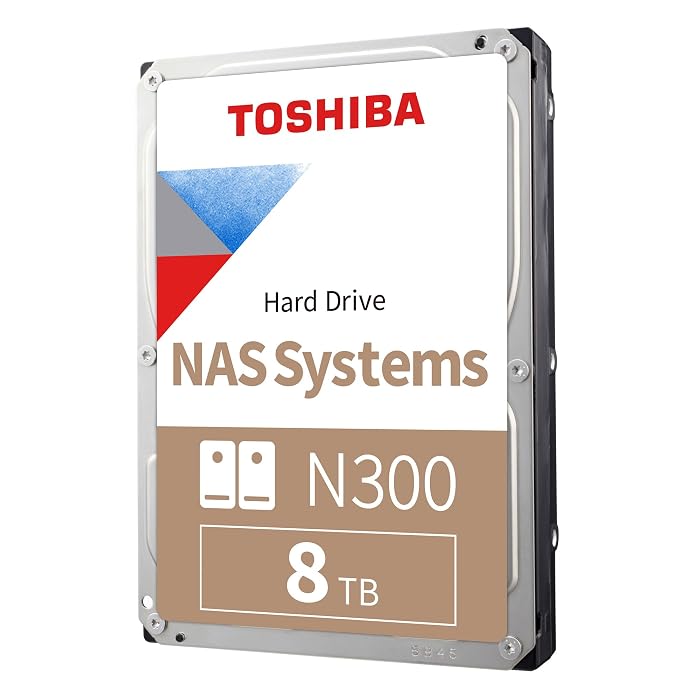
Toshiba N300 8TB
ToshibaTV
Very good
Our score: 8.8/10
Scores are out of 10, based on listed specifications and buyer feedback.
- Specs listed
- 10
- Section
- PC Components & Storage
Check price on Amazon We may earn a commission if you buy through this link.
As Amazon Associates, we earn from qualifying purchases. This means we may receive a small commission at no extra cost to you if you click through and make a purchase.
Choosing the right high-capacity drive for a network storage array or digital media server requires balancing sustained bandwidth against round-the-clock endurance. The Toshiba N300 8TB is designed specifically to address this niche, offering high-volume storage capacity paired with performance hardware tailored for shared server environments. If your workload involves continuous data backups, multi-user media streaming, or managing large sequential multimedia project directories, this 3.5-inch internal mechanical hard drive presents a compelling enterprise-grade architecture. This particular release delivers an 8TB storage pool operating at a swift 7200 RPM spindle speed with an expanded 512 MB cache buffer, making it a powerful candidate for small business storage appliances and creative studio networks.
For IT administrators and digital content producers, understanding the precise hardware capabilities of storage media prevents costly bottlenecks and unexpected downtime. In this detailed toshiba n300 8tb review, we break down the underlying architecture, assess real-world expectations for read and media transfer rates, and examine whether this unit delivers the operational resilience required for multi-disk RAID configurations. We will also evaluate how it fits alongside capacity upgrades such as the toshiba n300 pro 12tb, compare its hardware profile against popular alternatives like the Seagate IronWolf line, and determine whether its balance of speed, cache capacity, and continuous uptime makes it the ideal investment for your setup.


What You Get With the Toshiba N300 8TB
The Toshiba N300 internal hard drive arrives in an internal bulk packaging format designated by model reference W129162310, focusing on the core hardware essentials needed to mount and deploy the unit into a compatible chassis or multi-drive bay enclosure. Inside the standard bulk shipment, the listing specifies the drive itself without bundled accessories, consumer cabling, or external brackets, making it optimal for system integrators and storage administrators who already possess standardized mounting hardware.
In the box
- One Toshiba N300 8TB 3.5-inch internal hard disk drive
- Standard SATA 6.0 Gb/s connectivity interface for standard computer bus architectures
- High-speed 7200 RPM rotational mechanical spindle design
- Massive integrated 512 MB data buffer for command caching and streaming stability
- Bulk enterprise internal hardware packaging under part code W129162310
- Engineered compatibility profiles for enterprise servers, multimedia arrays, and desktop computers
- Factory-specified safe operational profile designed for high-workload storage integrity
Key Specifications
| Digital Storage Capacity | 8 TB |
|---|---|
| Rotational Speed | 7200 RPM |
| Hard Disk Interface | SATA 6.0 Gb/s (SATA3) |
| Cache Buffer Size | 512 MB |
| Maximum Read Speed | 281 MB/s |
| Maximum Data Transfer Rate | 281 MB/s |
| Internal Media Speed | 250 MB/s |
| Form Factor | 3.5 inches (8.9 cm) |
| Specific Uses For Product | Enterprise, multimedia |
| Model Identifier | W129162310 |
All 32 attributes from the listing
| Digital Storage Capacity | 8 TB |
|---|---|
| Hard Disk Interface | SATA 6 GB/s |
| Connectivity Technology | SATA |
| Additional Features | Safe |
| Hard Disk Form Factor | 3.5 inches |
| Compatible Devices | Computer |
| Hard Disk Rotational Speed | 7200 rpm |
| Specific Uses For Product | Enterprise, multimedia |
| Read Speed | 281 megabytes per second |
| Media Speed | 250 megabytes per second |
| Data Transfer Rate | 281 megabytes per second |
| Form Factor | 3.5-inch |
| Hardware Connectivity | SATA 6.0 Gb/s |
| Hardware Platform | Standard |
| Installation Type | Internal Hard Drive |
| Color | Original |
| Enclosure Material | Plastic |
| Brand | TOSHIBA |
| Model Number | 10890387 |
| Hard Disk Description | Mechanical Hard Disk |
| Built-In Media | Instructions for use, cable or socket. |
| Model Name | 1051080 |
| Manufacturer | Toshiba |
| Mfr Part Number | MN10ADA800S |
| Best Sellers Rank | #236 in Network Attached Storage (NAS) Devices |
| ASIN | B0DY4KPBC4 |
| Hard-Drive Size | 8192 GB |
| Item Weight | 0.76 kg |
| Item Dimensions L x W x Thickness | 0.79"L x 3.94"W x 5.51"Th |
| Number of Items | 1 |
| Unit Count | 1 Count |
| Special Feature | Safe |
Figures as published by the manufacturer on the Amazon listing.
Transfer Speeds and Cache Performance Under Heavy Loads
Throughput is a decisive metric when evaluating high-capacity mechanical drives, especially in production environments handling large video assets, operating system images, or extensive virtual drive containers. The toshiba n300 8tb transfer speed stands out in its category, reaching a manufacturer-rated read speed and maximum data transfer rate of 281 MB/s, alongside a steady media transfer speed of 250 MB/s. These figures place this spinning platter drive at the upper tier of conventional 3.5-inch magnetic storage. Unlike lower-tier 5400 RPM drives that throttle to sub-180 MB/s rates during sustained file writes, the 7200 RPM motor maintains elevated surface velocity across the disk platters, translating to rapid access and consistent sequential pipeline delivery.
A notable technical highlight in the toshiba n300 8tb specs is the inclusion of an expansive 512 MB cache buffer. In data-heavy workflows, the cache operates as high-speed memory buffering inbound writes and staging outbound read blocks before they hit slower physical platters. When multiple network users access the storage volume concurrently, this toshiba n300 512mb cache architecture helps prevent queue saturation and reduces command wait states. While modern solid-state options like the aorus gen4 8tb ssd inevitably provide vastly superior random IOPS and multi-gigabyte throughput for live editing timelines, the N300 delivers exceptional cost-per-terabyte efficiency while remaining fast enough to fully saturate standard Gigabit and 2.5GbE network links.
The high sustained transfer speed is equally beneficial for multi-stream multimedia playback and scheduled backup jobs. Backing up multi-terabyte datasets overnight requires a drive that does not suffer from aggressive thermal throttling or cache drop-offs. The steady 250 MB/s media speed ensures that sequential ingest tasks, such as dumping high-bitrate camera cards or archiving enterprise server snapshots, complete within predictable operational windows without creating system lag.
Continuous Operation and Enterprise NAS Durability
Deploying the toshiba n300 8tb for nas duty requires absolute confidence in continuous hardware endurance. Unlike standard consumer desktop drives designed for intermittent personal computing sessions, this drive carries explicit manufacturer ratings for enterprise and multimedia deployment. The structural demands of continuous spinning create physical strain on spindle bearings and actuator arms. Toshiba addresses this operational stress by engineering the N300 platform with enterprise-focused components aimed at 24/7 continuous operation, ensuring that file servers and shared repositories remain reachable without unexpected hardware faults.
Long-term toshiba n300 8tb reliability is supported by internal firmware optimizations that actively manage rotational vibration and thermal fluctuations common to multi-drive chassis. When four, six, or eight drives spin simultaneously within a shared backplane, harmonic resonance can cause traditional drive heads to mistrack, generating read errors or dropped packets. The internal architecture of this 7200 RPM drive stabilizes platter rotation and head tracking under multi-bay operational stresses. For organizations managing sensitive client archives, these enterprise safeguards reduce the likelihood of silent data corruption and unexpected volume degradation.
Furthermore, deploying an enterprise-rated internal hard drive ensures better handling of error recovery commands. In standard consumer drives, a single unreadable sector can cause the internal controller to freeze operations for minutes while attempting re-reads, which often leads RAID controllers to mistakenly drop the entire disk from an active array. The N300 firmware is designed to communicate with RAID storage managers efficiently, prioritizing array integrity and keeping the volume online even during routine block maintenance.
System Integration and Noise Profile in Workstation Environments
Integrating high-speed storage into compact studio spaces or home office environments demands consideration of operating temperatures and acoustic output. The toshiba n300 7200rpm 8tb drive delivers significant speed advantages over 5400 RPM counterparts, but the higher rotational velocity inherently generates more mechanical sound during active read and write operations. In small desktop enclosures, users will notice audible head seeks during random data requests. If your storage enclosure is located within arm’s reach on an editing desk, placing the array inside a sound-dampened cabinet or positioning it in a dedicated utility closet will yield a much quieter workspace.
Thermal management is another vital engineering factor when packing multiple 7200 RPM drives into compact tower enclosures. Because higher rotational speeds produce additional friction and heat, maintaining adequate chassis airflow is essential. The drive features standard 3.5-inch form factor dimensions and plastic-reinforced housing elements noted in the manufacturer specifications, allowing seamless installation into conventional drive sleds, hot-swap trays, and server caddies. Ensuring that intake fans deliver unobstructed positive air pressure across the drive chassis keeps operating temperatures within safe operational limits, preventing premature component wear.
For users transitioning from compact external drives like the toshiba canvio basics 1tb, it is important to remember that internal enterprise drives prioritize sustained mechanical throughput over whisper-quiet operation. While portable drives rely on low-power 2.5-inch platters with limited throughput, the N300 utilizes an enterprise 3.5-inch architecture built for raw data delivery. Factoring in adequate cooling and mounting isolation ensures you obtain the full performance benefits of the drive without experiencing thermal throttling or disruptive acoustic chatter.
Managing RAID Rebuilds and Large Array Workloads
One of the most stressful events for any storage array is the RAID rebuild process following a disk replacement or capacity expansion. In an 8TB array, rebuilding a degraded volume requires reading and writing petabytes of parity and block data across every participating disk. The consistent 250 MB/s media speed and 281 MB/s transfer rate of the Toshiba N300 significantly compress the time window required to restore array redundancy. Slower drives with smaller cache allocations can leave an array vulnerable for days, increasing the statistical probability of a secondary drive failure during heavy rebuild stress.
The integrated 512 MB cache buffer plays a critical operational role during array synchronization. By efficiently caching metadata updates and interleaving random administrative tasks with heavy sequential parity calculations, the drive avoids head thrashing during intensive write sequences. Storage systems running RAID 5, RAID 6, or ZFS pools benefit from this throughput stability, ensuring that routine business operations and file access can continue with minimal degradation while the storage controller restores full data redundancy in the background.
For small business server deployments, using uniform high-performance drives across the storage pool ensures predictable latency. When mismatched drives with varying rotational speeds or cache sizes are pooled together, the entire storage pool throttles down to match the slowest participating component. Standardizing your storage infrastructure on dedicated 7200 RPM drives with matched 512 MB buffers provides uniform read and write latencies, optimizing virtual machine storage repositories, centralized database backups, and shared media folders.
Toshiba N300 8TB Pros and Cons
Pros
- Fast 7200 RPM rotational spindle speed
- High 281 MB/s maximum data transfer rate
- Generous 512 MB internal cache buffer
- Large 8 TB enterprise storage capacity
- Sustained 250 MB/s media transfer speed
- Engineered for enterprise and multimedia use
Cons
- Bulk packaging lacks SATA cables and screws
- 7200 RPM operation generates noticeable seek noise
- Higher heat output requiring dedicated enclosure airflow
Check Toshiba N300 8TB on Amazon
Is the Toshiba N300 8TB Worth It
Determining whether the toshiba n300 internal hard drive is the right investment comes down to your workload demands, operational environment, and performance expectations. If you are building or upgrading a dedicated network storage server, multimedia production vault, or enterprise backup repository, the answer is a decisive yes. The combination of 8TB raw capacity, 7200 RPM rotational velocity, a 512 MB cache, and enterprise-focused firmware provides the sustained bandwidth and continuous reliability that professional environments require. It outpaces entry-level desktop drives across every performance metric, making it an excellent investment for demanding multi-user workflows.
On the other hand, this drive may not be the optimal fit for casual desktop users who simply need basic secondary storage for occasional document archiving or light personal computing. In single-drive desktop setups where silent operation and ultra-low power draw take precedence over multi-gigabit throughput, a simpler external backup solution such as a western digital elements external hard drive or a slower 5400 RPM desktop internal drive may prove more suitable. The mechanical seek acoustics and elevated thermal output of a 7200 RPM enterprise drive are tailored for ventilated server chassis and multi-bay enclosures rather than quiet bedroom offices.
Ultimately, is toshiba n300 8tb worth it for professional setups? Yes. For creative agencies, IT departments, and home lab enthusiasts seeking reliable high-density storage that does not compromise on data transfer speeds, the N300 delivers exceptional operational utility. Its robust transfer rates, substantial onboard cache, and enterprise-grade construction ensure long-term dependability for mission-critical digital assets.
Other Options to Consider
| Model | Our score | Why it is here |
|---|---|---|
 ToshibaTVTOSHIBA N300 Internal Hard Drive 8 Tb 7200 RPM 512 Mb 3.5"…Reviewed here |
8.8/10Very good | The model reviewed on this page. View listing |
 SeagateSeagate 8TB BarraCuda Internal Hard Drive | SATA 6 Gb/s (ST8000DM004) |
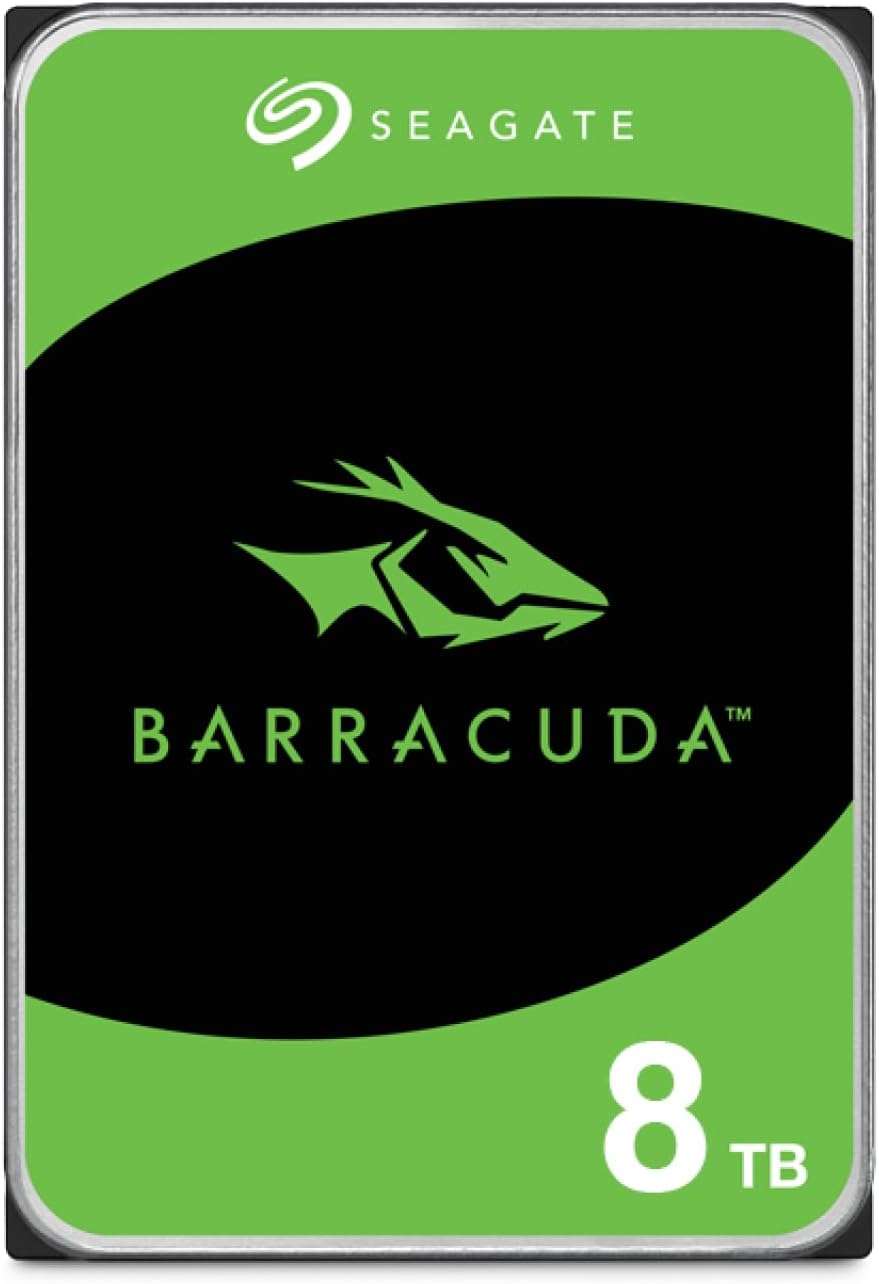
9.4/10Excellent | Desktop HDD for everyday PC provides an alternative path for users who need 8TB of bulk capacity but do not require 24/7 continuous multi-bay operation. Listed as an everyday PC storage drive for gaming and computing, this Seagate BarraCuda drive offers a 2-Year Warranty and 2-Year Rescue coverage over a standard SATA 6 Gb/s interface, making it a better fit for standard single-drive desktop builds rather than enterprise NAS racks. View listing |
 Western DigitalWestern Digital 6TB WD_Black Performance Internal Hard Drive HDD – 7200 RPM,… |
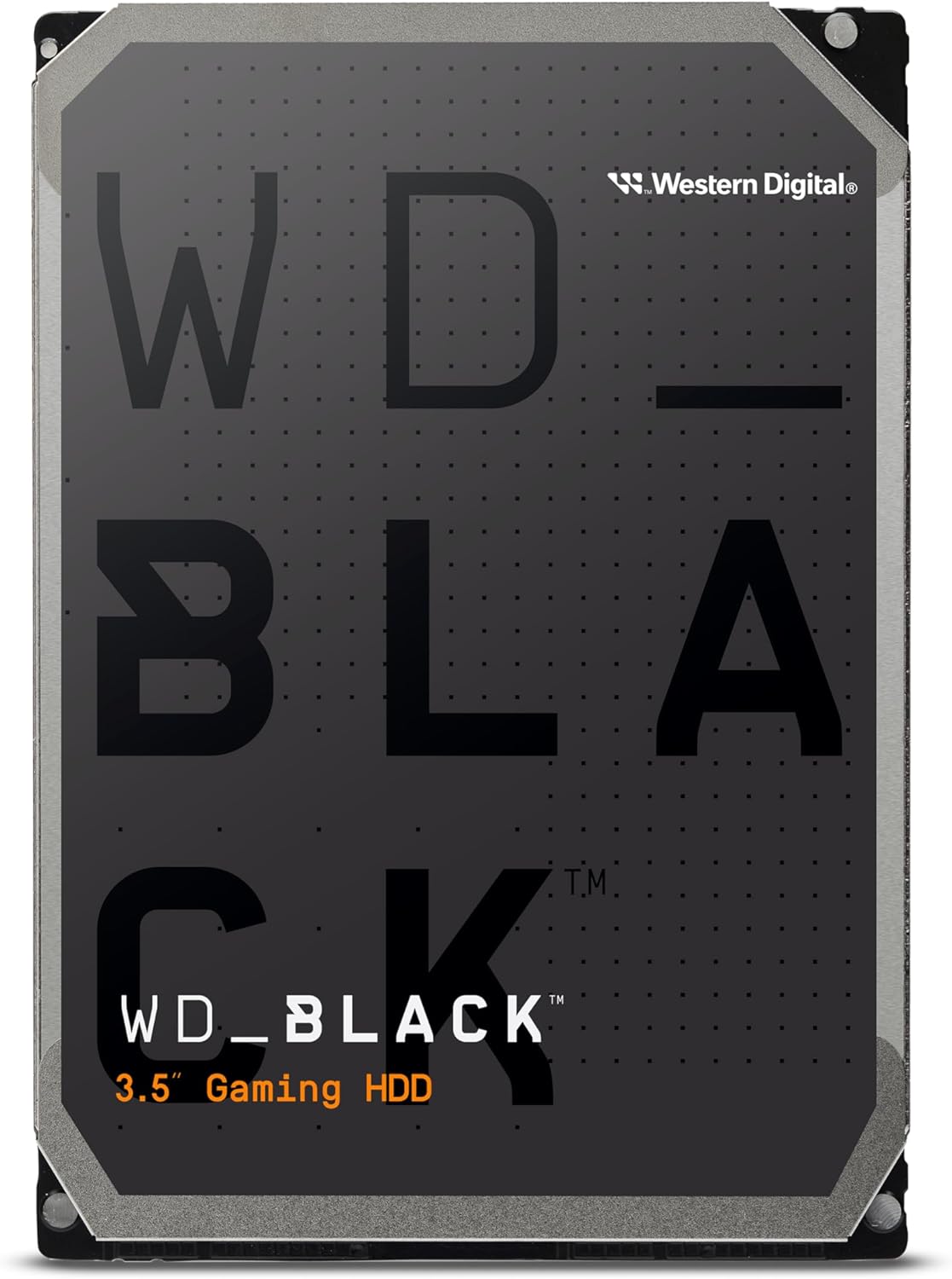
8.8/10Very good | Western Digital 6TB WD_Black Performance suits power users and workstation operators who prioritize dedicated performance over absolute maximum capacity. With a 7200 RPM rotational speed, SATA 6 Gb/s interface, 256 MB cache, and 3.5-inch form factor, this 6TB WD_Black internal hard drive is tailored specifically for high-intensity gaming rigs and creative workstations that demand responsive internal local storage rather than shared network server deployment. View listing |
 SeagateSeagate 8TB IronWolf Internal NAS Hard Drive | SATA 6 Gb/s (ST8000VNZ04) |
9.0/10Very good | 24 7 NAS-optimized HDD. AgileArray is the natural alternative for buyers weighing the toshiba n300 8tb vs seagate ironwolf comparison. While the Toshiba model emphasizes raw throughput with its 7200 RPM motor and 512 MB cache, this Seagate IronWolf 8TB drive features AgileArray technology, All-CMR architecture, rotational vibration sensors designed for multi-bay arrays, a 180TB/year workload limit, and includes a 3-Year Warranty with 3-Year Rescue Data Recovery services, making it an attractive choice for users who prioritize integrated recovery protection. View listing |
Scores are out of 10, based on listed specifications and buyer feedback. Prices are the ones on the listing when this page was written.
FAQ
What are the primary toshiba n300 8tb specs to know before buying?
The primary specifications include an 8TB digital storage capacity, 7200 RPM rotational speed, SATA 6.0 Gb/s interface, and an expanded 512 MB cache buffer. The drive delivers a maximum read speed and data transfer rate of 281 MB/s, a steady media transfer speed of 250 MB/s, and adheres to the standard 3.5-inch internal form factor for computer and enterprise storage platforms.
Is the Toshiba N300 8TB suitable for continuous 24/7 NAS operation?
Yes, the drive is engineered specifically for continuous enterprise, multimedia, and network storage environments. The manufacturer listing notes safe operational features and specific enterprise suitability, making it well-adapted to the mechanical demands, thermal loads, and vibrational stresses of multi-bay 24/7 storage servers.
How loud is the Toshiba N300 7200RPM 8TB drive during heavy seek operations?
Because the drive operates at 7200 RPM to maximize sustained data throughput, it produces noticeable mechanical seek noise during heavy random read and write tasks. While typical for enterprise-class mechanical storage, users who place the drive in open desktop enclosures in quiet rooms may hear audible head clicks during intensive workloads.
Does the Toshiba N300 8TB come with SATA cables or mounting screws?
No, the listing designates this model as internal bulk packaging under part code W129162310. It ships as a bare internal hard drive without bundled SATA data cables, power adapters, or mounting screws, meaning you must utilize the mounting hardware and cabling provided with your PC chassis or NAS enclosure.
How does the 512 MB cache buffer impact real-world transfer speeds?
The large 512 MB cache buffer temporarily stores incoming and outgoing data blocks, smoothing out transfer spikes and preventing drive queue bottlenecks during heavy multi-user workloads. This large buffer allows the drive to sustain high media transfer speeds of up to 250 MB/s and peak read rates of 281 MB/s without stuttering during large file transfers.
More PC Components & Storage ratings
See the section
Kingston Canvas Go! Plus 256GB microSDXC: A Fast, Reliable Field Storage Solution
For creators capturing high-bitrate aerial footage, action photography, and handheld gaming libraries, finding reliable storage that prevents dropped frames without overspending on unnecessary cinema…

MSI MAG B860 Tomahawk WiFi: The Pragmatic LGA 1851 Motherboard
For system builders and technical professionals deploying Arrow Lake desktop systems, choosing an intel b860 lga 1851 motherboard represents a calculated decision to bypass…

MSI MAG X670E Tomahawk WiFi: The Pragmatic AM5 Platform
Selecting the right foundation for a heavy-compute desktop build requires balancing long-term socket longevity with stable power routing and modern interface speeds. The MSI…

Intel Core i5-13600K: The No-Nonsense Desktop CPU Guide
Choosing the right processor often forces builders to weigh expensive flagship chips against mid-range alternatives that might choke on demanding professional workflows. The Intel…
Buyer favourite Scored 9.0+/10

MSI MPG A850G Power Supply Breakdown: Direct Buying Advice
Selecting the right power supply unit for a modern workstation or gaming rig requires balancing consistent electrical delivery, transient spike suppression, and clean interior…
Buyer favourite Scored 9.0+/10
Get new ratings by email
A weekly digest of the products added to the ratings pages.