Sabrent Rocket 4 Plus 8TB Analysis: Maximum Gen4 NVMe Capacity
Shoppers evaluating high-capacity storage often weigh alternatives like an aorus gen4 8tb ssd against proven hardware capable of consolidating extensive file libraries into a single M.2 slot. The Sabrent Rocket 4 Plus…
By Scott Brennan 9 min read

Sabrent Rocket 4 Plus 8TB
Sabrent
Very good
Our score: 9.2/10
Scores are out of 10, based on listed specifications and buyer feedback.
- Specs listed
- 9
- Section
- PC Components & Storage
Buyer favourite Scored 9.0/10 or higher
Check price on Amazon We may earn a commission if you buy through this link.
As Amazon Associates, we earn from qualifying purchases. This means we may receive a small commission at no extra cost to you if you click through and make a purchase.
Shoppers evaluating high-capacity storage often weigh alternatives like an aorus gen4 8tb ssd against proven hardware capable of consolidating extensive file libraries into a single M.2 slot. The Sabrent Rocket 4 Plus 8TB delivers that expansive capacity on a high-throughput PCIe 4.0 x4 NVMe architecture. For production specialists, database managers, and content creators, moving to an eight-terabyte internal drive eliminates drive-spanning headaches, frees motherboard slots, and streamlines heavy project pipelines. Rather than balancing multiple small secondary drives, this module brings fast Gen4 sequential data transfers directly to your system bus.
Navigating ultra-dense solid-state storage requires understanding whether an 8TB module can sustain heavy throughput without thermal degradation or software hurdles. This analysis examines the drive’s real-world capabilities, including rated read and write speeds, thermal management, console integration, and system utilities. We review how the drive performs across demanding workstation pipelines, detail its bundled software ecosystem, and evaluate whether it serves as the ultimate storage expansion for your desktop PC or gaming setup.


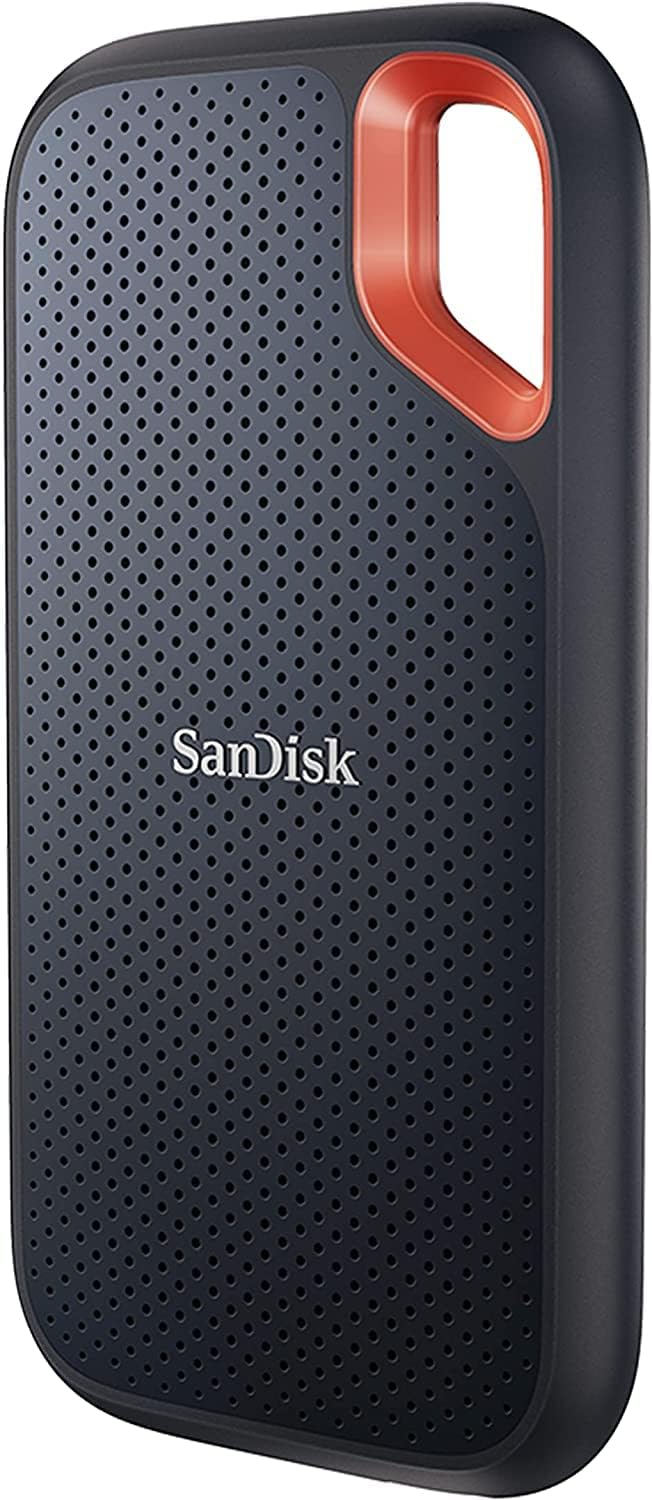

What You Get With the Sabrent Rocket 4 Plus 8TB
The Sabrent Rocket 4 Plus 8TB arrives as an internal M.2 2280 module engineered for direct motherboard installation and high-bandwidth data transfers. Below are the primary hardware features, integration capabilities, and bundled software utilities specified by the manufacturer:
In the box
- PCIe 4.0 and NVMe 1.3 compliant interface operating across four PCIe Gen4 lanes.
- Full compatibility with Sony PlayStation 5 consoles, standard desktop PCs, laptops, and external M.2 NVMe enclosures.
- Integrated power management architecture with support for APST, ASPM, and L1.2 power states.
- Hardware command support for SMART health tracking and TRIM garbage collection algorithms.
- Memory bus compatibility supporting ONFi 2.3, ONFi 3.0, ONFi 3.2, and ONFi 4.0 interface standards.
- Firmware reliability features including Advanced Wear Leveling, Bad Block Management, Error Correction Code, and Over-Provisioning.
- Free Sabrent Acronis True Image for Sabrent software license for system cloning and data migration.
- Dedicated Sabrent formatting utility that allows users to re-format the drive and select custom sector sizes.
Key Specifications
| Digital Storage Capacity | 8 TB |
|---|---|
| Interface Standard | NVMe M.2 PCIe Gen4 x4 (NVMe 1.3 Compliant) |
| Form Factor | M.2 2280 |
| Maximum Read Speed | 7100 megabytes per second |
| Maximum Write Speed | 6600 megabytes per second |
| Cache Memory Installed Size | 8 |
| Power Management Protocols | APST, ASPM, L1.2 |
| Device Weight | 4.26 g |
| Compatible Devices | PC, Laptop, PS5 Console, External NVMe Enclosure |
All 10 attributes from the listing
| Digital Storage Capacity | 8 TB |
|---|---|
| Hard Disk Interface | NVMe |
| Connectivity Technology | NVMe M.2 |
| Brand | SABRENT |
| Special Feature | PCIe 4.0 |
| Hard Disk Form Factor | 2280 centimeters |
| Hard Disk Description | Solid State Hard Drive |
| Compatible Devices | External enclosure with m.2 NVMe Slot, Laptop, PC, Sony Playstation 5 |
| Installation Type | Internal Hard Drive |
| Color | SSD ONLY |
Figures as published by the manufacturer on the Amazon listing.
Workstation Throughput and Sustained Read Speed
Deploying the Sabrent Rocket 4 Plus for workstation tasks provides the bandwidth needed to eliminate storage bottlenecks during continuous data operations. Operating over a PCIe 4.0 x4 bus, the rated Sabrent Rocket 4 Plus 8TB read speed achieves up to 7100 megabytes per second, alongside sequential write speeds reaching 6600 megabytes per second. For creative workflows handling uncompressed 4K or 8K video capture, 3D rendering caches, and large virtual machine images, these sequential transfer rates allow massive file transfers to finish rapidly. Users upgrading from fast 2TB units like the ssd 990 pro gain comparable Gen4 transfer speeds while quadrupling their single-drive capacity.
Sustained performance on an eight-terabyte storage unit demands dependable controller scheduling and low latency. The drive incorporates an 8-size cache memory implementation and adheres to NVMe 1.3 protocols, allowing rapid processing of high-queue-depth read requests. When ingesting gigabytes of raw production assets or loading simulation libraries, the PCIe Gen4 interface maintains responsive system feedback. Heavy multitasking environments gain efficiency because operating systems do not need to pause on fragmented block allocation across secondary storage pools.
High-end desktop users who run creative suites benefit substantially from single-volume storage consolidation. Instead of configuring software RAID arrays across multiple M.2 slots—which often forces PCIe lane sharing and drops graphics cards to x8 mode—a single 8TB solid-state drive occupies only one standard four-lane connector. This architectural efficiency leaves motherboard lanes open for capture cards or secondary expansion, making Gen4 storage straightforward to implement in workstation configurations.
Console Storage Expansion and System Compatibility
Confirming Sabrent Rocket 4 Plus PS5 compatibility is an essential priority for console gamers looking to maximize internal game libraries. Modern gaming titles routinely occupy well over one hundred gigabytes of storage, quickly overwhelming internal console reserves. Because this unit complies with PCIe Gen4 x4 parameters and delivers up to 7100 megabytes per second sequential reads, it easily exceeds the read-rate performance floor recommended by Sony for seamless game loading, asset streaming, and system updates.
While the physical form factor adheres to the standard M.2 2280 design and weighs 4.26 grams, console owners must remember that high-density double-sided M.2 drives generate heat during rapid write bursts. The listing notes direct console compatibility, but adding a dedicated aftermarket heatsink compliant with console expansion bay dimensions is critical to prevent thermal throttling. Installing the drive expands console capacity to its absolute maximum ceiling, enabling massive game libraries to live on high-speed internal solid-state media without offloading to slower external drives.
Beyond gaming consoles, the drive features broad compatibility across enterprise laptops, tower personal computers, and portable external enclosures equipped with an M.2 NVMe slot. Users creating ultra-fast field drives can install this drive into an active-cooling enclosure to transfer terabytes of footage on location. Desktop PC builders will find that modern motherboards with integrated metal heatsink shields handle the physical clearance of the 2280 format cleanly, establishing an immediate plug-and-play storage upgrade.
Drive Architecture, Endurance, and File Management
When assessing long-term 8tb m.2 ssd endurance, the structural management of NAND flash blocks becomes paramount. Packing eight terabytes of flash memory into an M.2 2280 printed circuit board requires dense memory layering. To maintain data integrity, the drive incorporates Advanced Wear Leveling, which dynamically balances write cycles across memory cells to prevent premature cell fatigue. It pairs this with Bad Block Management, automated Error Correction Code algorithms, and factory Over-Provisioning, all working quietly in the background to isolate degraded sectors and protect mission-critical professional assets.
Although the product listing details sophisticated wear-leveling algorithms and enterprise-grade block management, the listing does not specify an exact Terabytes Written endurance figure or warranty period. Buyers who require contractual TBW figures for enterprise compliance should evaluate standard consumer drive lifecycles or review specialized alternatives such as the wd_black 8tb sn850x for comparison. Nevertheless, the presence of ONFi 2.3 through ONFi 4.0 interface compatibility indicates modern NAND bus communication designed for high-density flash arrays, while TRIM command support prevents performance degradation over years of repeated file deletions.
Deploying a sabrent 8tb nvme gen4 drive is greatly simplified by the included software package. Sabrent bundles a free version of Acronis True Image for Sabrent, allowing users to clone existing operating system drives, replicate partition tables, and migrate boot environments without purchasing third-party disk utilities. Additionally, Sabrent provides a proprietary sector-size utility. This allows power users and system administrators to re-format the drive and select an optimal sector size—such as choosing between standard 512-byte or advanced 4096-byte native sector formats—ensuring flawless image cloning from legacy drives.
Power States and Thermal Considerations in Dense NVMe Drives
Thermal management is an inescapable consideration when running an 8tb pcie 4.0 nvme ssd under heavy sustained read and write operations. Pushing up to 7100 megabytes per second through high-density flash packages generates substantial localized heat on the controller and memory dies. Motherboard heatsinks with thermal pads are strongly advised to keep controller temperatures well within operational boundaries, preventing internal safety throttles from capping sustained write speeds during massive file archives or render exports.
To keep idle and moderate-use thermal profiles efficient, the drive incorporates advanced hardware power management protocols. It includes complete support for Autonomous Power State Transitions, Active State Power Management, and L1.2 low-power sub-states. These power management routines allow the solid-state controller to shed wattage instantly when idle, cooling the drive down between bursts of activity. Builders evaluating competitive Gen4 solutions like the crucial ssd t500 will recognize that disciplined power state transitions are critical for maintaining low system chassis temperatures and reducing unnecessary power draw.
In compact environments such as gaming laptops or high-density small-form-factor desktop PCs, airflow around the M.2 slots is often constrained. Because an eight-terabyte module populates both sides of the printed circuit board with memory packages, users should verify physical clearance between the motherboard surface and chassis standoffs. When installed with adequate heat dissipation, the drive balances high-octane Gen4 bandwidth with power-sipping idle performance, ensuring smooth system behavior during intensive rendering jobs and quiet workstation background operations.
Sabrent Rocket 4 Plus 8TB Pros and Cons
Pros
- Immense 8TB storage capacity on M.2 form factor
- Sequential read speeds up to 7100 MB/s
- Direct compatibility with PlayStation 5 consoles
- Includes free Acronis True Image cloning software
- Advanced wear leveling and bad block management
Cons
- Thermal output requires dedicated heatsink cooling
- Listing omits specific Terabytes Written endurance rating
- Dense double-sided layout limits ultra-slim laptop fit
Check Sabrent Rocket 4 Plus 8TB on Amazon
Is the Sabrent Rocket 4 Plus 8TB Worth It
Deciding whether the is sabrent rocket 4 plus 8tb worth it evaluation leans in your favor comes down to whether your workflow genuinely requires uncompromised single-drive capacity combined with top-tier Gen4 sequential throughput. For video editors working with multi-terabyte raw timelines, visual effects artists compiling massive asset libraries, and sound designers managing vast sample collections, this drive eliminates the daily friction of managing separate drives. Keeping eight terabytes of active project files on a single ultra-fast storage volume without sacrificing NVMe transfer speeds delivers measurable time savings across professional creative pipelines.
Reviewing the sabrent rocket 4 plus 8tb specs shows that it is explicitly tuned for power users, workstation professionals, and extreme gaming enthusiasts who have outgrown standard 2TB or 4TB solid-state drives. If your workload consists primarily of basic office software, light web browsing, or a modest catalog of indie games, investing in an eight-terabyte performance drive is unnecessary overkill. Standard smaller storage drives deliver identical day-to-day boot responsiveness for typical computing tasks without requiring high-density memory arrays.
However, for power users who demand maximum density in a single M.2 2280 slot—whether in an elite desktop rig, a loaded PlayStation 5 console, or a high-capacity mobile workstation—the drive stands as an exceptionally capable storage solution. Between its 7100 MB/s read speeds, bundled Acronis cloning tools, and custom sector formatting utility, it delivers an uncompromising storage upgrade that solves physical drive slot limitations decisively.
Other Options to Consider
| Model | Our score | Why it is here |
|---|---|---|
 SabrentSABRENT 8TB Rocket 4 Plus NVMe 4.0 Gen4 PCIe M.2 Internal SSD…Reviewed here |
9.2/10Very good | The model reviewed on this page. View listing |
 SamsungSamsung SSD 990 PRO 2TB, PCIe 4.0 M.2 2280, Up to 7,450… |
8.4/10Good | NVMe Internal Solid State Hard suits gamers and workstation builders who prioritize maximum Gen4 sequential speeds up to 7450 megabytes per second over raw storage volume, offering a reliable 2TB footprint tailored for operating systems and intensive computing tasks. View listing |
 SanDiskSandisk 2TB Extreme Portable SSD, Up to 1050MB/s, USB-C, USB 3.2 Gen… |
9.2/10Very good | Sandisk 2TB Extreme Portable SSD suits mobile professionals and field photographers who require rugged external storage with USB-C connectivity, IP65 water and dust resistance, and 1050 megabytes per second speeds rather than an internal M.2 motherboard installation. View listing |
 Fanxiang256GB External SSD USB Drive, 520MB/s USB-C & USB-A Portable SSD -F901 |
9.2/10Very good | Zinc Alloy suits mobile device owners seeking an ultra-compact 256GB external thumb drive with dual USB-C and USB-A connections for quickly offloading photos and files from smartphones, tablets, and personal computers at up to 520 megabytes per second transfer rates. View listing |
Scores are out of 10, based on listed specifications and buyer feedback. Prices are the ones on the listing when this page was written.
FAQ
How does the Sabrent Rocket 4 Plus 8TB handle continuous heavy read operations?
The drive leverages a PCIe 4.0 x4 interface operating under NVMe 1.3 protocol standards to achieve sequential read speeds up to 7100 megabytes per second. Backed by an 8-size cache implementation and ONFi flash architecture, it maintains rapid data retrieval across large multi-gigabyte files and continuous asset streaming workflows.
Is the Sabrent Rocket 4 Plus 8TB compatible with the PlayStation 5 internal expansion bay?
Yes, the drive is fully compatible with the Sony PlayStation 5. Its M.2 2280 form factor and 7100 MB/s sequential read performance exceed the console manufacturer’s recommended bandwidth requirements, though installing an aftermarket heatsink is recommended to manage internal temperatures.
What cloning and maintenance software is included with the drive?
The SSD includes a free license for Sabrent Acronis True Image for Sabrent, which streamlines operating system cloning and disk backups. Users also receive access to a dedicated Sabrent sector-size utility that allows reformatting the drive to select specific sector sizes for legacy cloning requirements.
What does the manufacturer listing state regarding write endurance and reliability?
The listing highlights advanced reliability technologies including Advanced Wear Leveling, Bad Block Management, Error Correction Code, and Over-Provisioning to maintain cell integrity. However, the listing does not specify an exact Terabytes Written numerical endurance limit.
Can this 8TB solid-state drive be installed in a laptop or external enclosure?
Yes, the drive supports installation in personal computer towers, compatible laptops, and external M.2 NVMe enclosures. Because of its double-sided 8TB component layout and Gen4 performance profile, users should ensure the host enclosure or laptop chassis provides adequate physical clearance and thermal dissipation.
More PC Components & Storage ratings
See the section
ASUS ROG Strix RTX 4070 Super: Definitive Performance Breakdown
Choosing the right GPU for an intensive workstation requires balancing raw compute capability, sustained thermal headroom, and acoustic isolation under heavy render loads. The…

MSI Z270 Gaming M7 Motherboard: Full Feature & Performance Breakdown
Replacing a defective motherboard in an operational workstation or gaming system often forces an expensive decision between a full hardware overhaul and finding a…
AMD Ryzen 5 5600 Desktop Processor: The Pragmatic AM4 Upgrade
If you need a dependable, high-efficiency processor to upgrade an aging desktop, the AMD Ryzen 5 5600 is an exceptional choice for modern multitasking…
Buyer favourite Scored 9.0+/10

Kingston Canvas Go! Plus 256GB microSDXC: A Fast, Reliable Field Storage Solution
For creators capturing high-bitrate aerial footage, action photography, and handheld gaming libraries, finding reliable storage that prevents dropped frames without overspending on unnecessary cinema…

MSI MAG B860 Tomahawk WiFi: The Pragmatic LGA 1851 Motherboard
For system builders and technical professionals deploying Arrow Lake desktop systems, choosing an intel b860 lga 1851 motherboard represents a calculated decision to bypass…
Get new ratings by email
A weekly digest of the products added to the ratings pages.