HOVERAir X1 PROMAX Review: Decisive Assessment for Fast-Paced Filming
Evaluating the HOVERAir X1 PROMAX requires examining whether an autonomous flying action camera with 8K recording and automated flight paths genuinely eliminates the operational friction of traditional drones. For solo creators, endurance…
By Brian Carver 10 min read

HOVERAir X1 PROMAX
HOVER Air
Very good
Our score: 9.2/10
Scores are out of 10, based on listed specifications and buyer feedback.
- Specs listed
- 10
- Section
- Cameras & Drones
Check price on Amazon We may earn a commission if you buy through this link.
As Amazon Associates, we earn from qualifying purchases. This means we may receive a small commission at no extra cost to you if you click through and make a purchase.
Evaluating the HOVERAir X1 PROMAX requires examining whether an autonomous flying action camera with 8K recording and automated flight paths genuinely eliminates the operational friction of traditional drones. For solo creators, endurance athletes, and fast-moving outdoor enthusiasts, the appeal of completely hands-free capture without juggling a bulky remote controller or complex mobile device calibration is immediate. This assessment explores whether the flagship tier of the hoverair x1 pro & promax lineup delivers the tracking reliability, optical fidelity, and obstacle management needed to replace or augment conventional action cameras during intensive activities.
Selecting the right capture tool between standard self-flying cameras and professional-grade options depends heavily on velocity demands, resolution requirements, and terrain variation. In this focused hoverair x1 promax review, we break down autonomous tracking dynamics, real-world 8K video utility, environmental surface tracking, battery longevity, and safety boundaries to help you decide if this high-speed flying camera earns a permanent spot in your field production kit.


What You Get With the HOVERAir X1 PROMAX
The HOVERAir X1 PROMAX package delivers a self-contained aerial system engineered for immediate deployment from the palm of your hand without mandatory ground-station hardware or pairing steps.
In the box
- Autonomous 8K video capture at 30 frames per second alongside dedicated 4K vertical recording modes for mobile-first content.
- SmoothCapture 2.0 stabilization technology combining a physical two-axis gimbal with electronic image stabilization and horizon leveling.
- A 107-degree field-of-view optical lens paired with a CMOS sensor capable of capturing 12-megapixel JPEG still images.
- Complete hands-free deployment supporting palm takeoff and landing via physical hardware buttons or direct voice commands.
- High-speed subject tracking capable of sustaining follow speeds up to 42 km/h (26 mph) with burst acceleration reaching 60 km/h.
- OmniTerrain flight algorithms engineered to maintain tracking across low-contrast and challenging surfaces including snow, water, and cliff edges.
- A dedicated rear active collision detection system driven by a Time of Flight proximity sensor and rear visual sensor supporting automatic braking up to 3 m/s.
- Fully enclosed propeller guards manufactured from aerospace-grade HEM material designed for structural elasticity and impact resistance.
- Onboard internal storage capacity of 64GB paired with external memory support for micro SD cards up to 1TB.
- PROMAX Fly Joy Combo configuration providing three included A batteries, charging accessories, and a foldable 120-gram airframe.
Key Specifications
| Sensor Type | CMOS |
|---|---|
| Video Resolution | 8K at 30fps, 4K, 4K vertical |
| Still Image Resolution | 12 MP (JPEG format) |
| Stabilization Hardware | Two-Axis Gimbal, EIS, Horizon Leveling |
| Lens Field of View | 107 Degrees |
| Airframe Weight | 120 g |
| Follow Tracking Speed | Up to 42 km/h (26 mph); 60 km/h burst |
| Battery Average Life | 16 minutes per battery |
| Internal and External Storage | 64GB built-in; supports up to 1TB external micro SD |
| Collision Sensing | Rear Active ToF Proximity and Visual Sensor |
All 35 attributes from the listing
| Sensor Type | CMOS |
|---|---|
| Connectivity Technology | Wi-Fi |
| Color | Black |
| Special Feature | Intelligent Flight Paths, Triple Stabilization, SmoothCapture 2.0, Active Collision Detection, OmniTerrain Flight See more |
| Water Resistance Level | Water Resistant |
| Image stabilization | EIS (Electronic Image Stabilization), Horizon Leveling, Two-Axis Gimbal |
| Form Factor | foldable |
| Item Weight | 120 g |
| Battery Average Life | 16 minutes |
| Style Name | PROMAX(Fly Joy Combo) |
| Number of Batteries | 3 A batteries required. (included) |
| Video Resolution | 8K 4K |
| Video Capture Format | MP4 |
| Effective Still Resolution | 12 mp |
| Shooting Modes | Hover, Zoom Out, Follow, Dolly Track |
| Image Aspect Ratio | 16:9 |
| Supported Image Format | JPEG |
| File Format | MP4, JPEG |
| Effective Video Resolution | 8 kilopixel |
| Brand | HOVERAir |
| Model Number | SP06H062 |
| Camcorder Type | Action Camera |
| Model Name | HOVERAir X1 PROMAX |
| Built-In Media | HOVERAir X1 PROMAX*1; HOVERAir X1 PRO Smart Battery*2; X1 PRO/PROMAX Charging Hub *1; Charging plug*1; Combo case*1; Storage Bag *1; Joystick Set*1; Handlebar Mount *1; Magnetic Adapter Mount*1 |
| Manufacturer | Shenzhen Zero Zero Infinity Technology Co.,Ltd. |
| Best Sellers Rank | #14,834 in Electronics (See Top 100 in Electronics) #67 in Sports & Action Video Cameras |
| ASIN | B0F6CPDZMG |
| Maximum Focal Length | 10 meters |
| Maximum Aperture | 2.55 f stop |
| Minimum Focal Length | 60 centimeters |
| Lens Type | Wide Angle |
| Flash Memory Installed Size | 32 GB |
| Photo Sensor Technology | CMOS |
| Video Capture Resolution | 8K 4K |
| Camcorder type | Action Camera |
Figures as published by the manufacturer on the Amazon listing.
Autonomous Tracking Speed and High-Velocity Filming
The defining operational hurdle for autonomous flying cameras has always been matching real-world sports velocities without losing target lock or suffering motor stall. The hoverair x1 promax tracking speed addresses this by utilizing a streamlined aerodynamic airframe built to minimize drag, allowing the platform to sustain automated follow speeds up to 42 km/h (26 mph) and achieve burst sprints up to 60 km/h. This high-velocity threshold dramatically alters how dynamic activities are filmed. While entry-level follow drones are restricted to casual jogging or walking speeds, the upgraded processing chip and predictive tracking algorithms here keep fast-moving subjects locked firmly in the center of the frame during sustained runs.
Evaluating the hoverair x1 promax for cycling demonstrates how these performance metrics translate outside controlled environments. Road cyclists and cross-country mountain bikers regularly travel at speeds that exceed the tracking ceilings of previous generation autonomous drones. By maintaining framing at speeds above 40 km/h, the aircraft stays positioned behind or alongside the rider without lagging behind or wandering off path when cadence changes abruptly. Automated flight modes such as Follow, Dolly Track, Hover, and Zoom Out allow riders to trigger cinematic captures without pausing their cadence, dismounting, or operating handheld joysticks.
High-velocity field captures generate vast quantities of visual data that must be managed efficiently between tracking sessions. Athletes moving through remote riding trails often pair their field setups with a fast external solid-state drive like the crucial x9 2tb portable ssd to quickly dump high-bitrate clips from the internal memory and keep recording cycles uninterrupted throughout the day.
OmniTerrain Performance and Collision Detection Reliability
Standard visual positioning systems found on lightweight drones depend heavily on ground contrast, which typically causes optical navigation to fail or drift dangerously over uniform textures like powder snow, mirror-like water surfaces, or sheer vertical drops. The hoverair omniterrain flight architecture resolves this vulnerability by combining multi-sensor spatial positioning with adaptive algorithmic tracking. This enables the airframe to calculate relative elevation and positioning over reflective snowbanks, open water bodies, and cliff rims where conventional downward-facing optical sensors routinely become disoriented.
Flight safety at high velocity is reinforced by a specialized rear active collision detection system. Unlike traditional entry-level flying cameras that lack spatial sensors entirely, this model mounts a rear-facing Time of Flight proximity sensor alongside a dedicated rear visual camera. When the aircraft operates in backward-facing trajectories—such as during Dolly Track or Zoom Out modes—the system actively monitors approaching obstructions. If an obstacle is detected in the reverse flight path, the aircraft initiates automated active braking at speeds up to 3 m/s to prevent rearward impacts with trees, trail signage, or rocky outcroppings.
While this rear braking system provides critical insurance during backward tracking paths, operators must recognize its operational boundaries. The active detection hardware is strictly rear-facing rather than a full 360-degree omnidirectional sensor array. When following a subject forward at 42 km/h, lateral branches, overhead wires, and forward obstacles remain outside the active braking corridor. The fully enclosed HEM propeller cages provide passive structural protection against minor deflections, but navigating tightly wooded singletracks still demands deliberate path planning to ensure obstacle-free corridors.
Real-World 8K Video Capture and Storage Demands
Positioned as an advanced hoverair x1 promax 8k action camera, the imaging system integrates a high-resolution CMOS sensor supporting native 8K capture at 30 frames per second, standard 4K, and dedicated 4K vertical video. The primary workflow benefit of 8K capture in an autonomous flying camera is not merely playback on ultra-high-definition displays, but post-production flexibility. Because the camera operates automatically without manual camera operator framing, capturing in native 8K provides massive pixel overhead. Editors can digitally reframe, punch in for close-ups, crop horizontal master files into crisp vertical reels, and apply post-render digital stabilization without degrading final 4K deliverables.
Optical stability during aggressive flight maneuvers is governed by SmoothCapture 2.0 technology. This system combines a physical two-axis mechanical gimbal with real-time electronic image stabilization and automated horizon leveling across a wide 107-degree field of view. The physical gimbal absorbs high-frequency vertical and pitch vibrations caused by turbulent wind or aggressive motor acceleration, while the electronic stabilization and horizon leveling eliminate rotational roll. The resulting footage remains stable and level even during violent burst accelerations or sharp banking maneuvers along winding trails.
Handling 8K video files at 30 frames per second naturally introduces substantial processing and data throughput requirements. The camera includes 64GB of built-in internal storage, which offers immediate readiness out of the box, and features an expansion slot accepting micro SD cards up to 1TB for extended productions. In the studio, editing native multi-stream 8K footage without sluggish timeline scrubbing requires capable computational hardware, prompting many creators to rely on high-performance mobile workstations such as the msi vector 16 hx ai a2xwig to process demanding high-resolution exports efficiently.
Battery Endurance and Field Workflow Management
Operational runtime dictates how creators structure their shooting sessions, making hoverair x1 promax battery life a central consideration for field use. The manufacturer specifications rate average battery longevity at 16 minutes per charge. Powering an autonomous airframe that simultaneously manages automated motor thrust, real-time computer vision tracking, multi-sensor collision detection, physical gimbal adjustments, and 8K video encoding places heavy continuous demands on the internal cells. In cold ambient temperatures or against moderate headwinds, usable flight duration will naturally trend toward the lower end of that baseline rating.
Because automated flight paths are designed for targeted, self-contained shots rather than prolonged manual cruising, a 16-minute window is optimized for capture cycles lasting between 30 and 90 seconds. A single battery provides sufficient power for 8 to 12 autonomous flight runs, such as capturing repeated sprint passes, cycling switchbacks, or scenic perspective reveals. The PROMAX Fly Joy Combo includes three batteries, expanding available field operations to approximately 40 to 45 minutes of aggregate flight time, which is ample for standard day-trip productions when managed deliberately.
Creators reviewing high-resolution footage between flights must maintain a disciplined power and data workflow. Reviewing clips directly through the mobile application over Wi-Fi draws additional battery reserves from both the drone and smartphone. Packing multi-channel charging accessories and backing up capture cards directly to compact computing systems like the lenovo legion 5 32gb ram ensures that storage and battery banks stay refreshed throughout extended outdoor shooting schedules.
HOVERAir X1 PROMAX Pros and Cons
Pros
- Native 8K at 30fps and 4K vertical recording
- High follow tracking speed up to 42 km/h
- OmniTerrain tracking over snow water and cliff edges
- Autonomous palm launch with button and voice control
- Rear active ToF braking at speeds up to 3m/s
- Lightweight 120g folding frame with enclosed prop guards
Cons
- 16-minute average flight duration per battery
- Collision detection limited strictly to rear corridor
- External micro SD required for extended 8K shoots
Check HOVERAir X1 PROMAX on Amazon
Is the HOVERAir X1 PROMAX Worth It
Determining whether is hoverair x1 promax worth it hinges entirely on your production style and how much you value autonomous capture over manual piloting. If you are a solo athlete, mountain biker, trail runner, or action vlogger, traditional drones present significant operational friction: you must stop moving, unpack a controller, mount your smartphone, check airspace, and manually pilot the aircraft. The PROMAX eliminates virtually all of that overhead. With palm takeoff, automated tracking speeds reaching 42 km/h, hands-free voice controls, and protective enclosed prop guards, it functions as a personal flying camera operator that stays focused entirely on you.
When analyzing the hoverair x1 pro vs promax positioning, the value equation depends on your velocity and resolution thresholds. Baseline hoverair x1 pro specs provide capable tracking for moderate paces, but the PROMAX model is uniquely configured with the 8K sensor, higher 42 km/h sustained follow capability, and OmniTerrain tracking algorithms. For creators who produce sports content where speeds exceed casual running paces or who shoot across snow, water, and dramatic elevation shifts, the upgrades built into the PROMAX hardware directly solve critical tracking failures that limit lower-tier alternatives.
However, if your primary filming style consists of wide-angle scenic landscape exploration, slow architectural surveying, or manual long-range aerial photography, an autonomous follow camera may feel restrictive. Its flight ceiling, 16-minute battery life per pack, and proximity-focused autonomous modes are tuned specifically for subject tracking rather than sweeping horizon surveys. For dynamic action sports capture where you are both the subject and the director, the hardware delivers an exceptionally streamlined and potent workflow.
Other Options to Consider
| Model | Our score | Why it is here |
|---|---|---|
 HOVER AirHOVERAir X1 PROMAX Fly Joy Combo, 8K Action Flying Camera, Foldable DroneReviewed here |
9.2/10Very good | The model reviewed on this page. View listing |
 Loiley2K HD FPV Drone with Camera for Adults – Altitude Hold, One-Key… |
8.0/10Good | 2K HD FPV Drone suits budget-focused beginners, hobbyists, and younger pilots who want a basic introduction to manual quadcopter flight with altitude hold, one-key takeoff and landing, three speed modes, and headless mode rather than high-speed autonomous 8K tracking. View listing |
 DJIDJI Mini 4K, Drone With 4K UHD Camera, Under 249 g |
9.8/10Excellent | 3-Axis Gimbal suits landscape videographers and long-distance explorers who need 10km video transmission, auto return, 31 minutes of flight time, wind resistance, and a 3-axis gimbal on a sub-249g platform instead of a palm-launched follow camera. View listing |
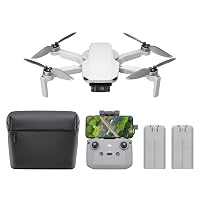 DJIDJI Mini 4K Camera Drone Combo, Drone with 4K UHD Camera for… |
8.8/10Very good | DJI Mini 4K Camera Drone suits content creators prioritizing established manual remote-controller piloting, QuickShots automated camera paths, long-range 10km video links, and up to 62 minutes of total airtime across two flight batteries over hands-free high-speed sports tracking. View listing |
Scores are out of 10, based on listed specifications and buyer feedback. Prices are the ones on the listing when this page was written.
FAQ
Can the HOVERAir X1 PROMAX operate without a smartphone or remote controller?
Yes. The aircraft is built for fully hands-free autonomous deployment. You can launch the flying camera directly from the palm of your hand, select flight modes such as Follow, Hover, Dolly Track, or Zoom Out using physical buttons on the airframe or voice commands, and retrieve it back to your palm without ever opening a mobile application or holding a dedicated controller.
How does the rear collision detection system work during tracking?
The rear safety system pairs a Time of Flight proximity sensor with an active rear visual sensor. When the drone travels backward during automated routines like Dolly Track or Zoom Out, it continuously scans the rear flight path. If an obstacle is detected within its sensing corridor, the system initiates automated braking at approach speeds up to 3 m/s to prevent rearward collisions.
Does the camera support external memory cards or only internal storage?
The camera features 64GB of built-in internal memory and includes an external memory card slot supporting micro SD cards up to 1TB. This combination allows you to record immediately out of the box while retaining the option to expand storage capacity for high-bitrate 8K filming sessions.
Is the drone capable of keeping up with fast road cycling or mountain biking?
Yes. Thanks to an aerodynamic redesign and enhanced tracking algorithms, the aircraft achieves sustained autonomous follow speeds up to 42 km/h (26 mph) and burst speeds up to 60 km/h. This velocity ceiling allows it to follow road cyclists, gravel grinders, and mountain bikers across open trails where standard autonomous drones fall behind.
What is the difference between SmoothCapture 2.0 and basic electronic stabilization?
SmoothCapture 2.0 combines three stabilization layers: a physical two-axis mechanical gimbal that physically counteracts pitch and vertical motion, electronic image stabilization that dampens micro-jitters, and automated horizon leveling that keeps the horizon flat during sharp turns or high-speed banking maneuvers across its 107-degree field of view.
More Cameras & Drones ratings
See the section
Fujifilm FinePix Z20fd: Fast Buying Advice for Professionals
Deciding on a secondary pocket camera requires balancing portability, operational speed, and visual character. The Fujifilm FinePix Z20fd enters that conversation as an ultracompact…

Fujifilm Instax Mini 12 Review: Quick Verdict on the Instant Camera Bundle
If you are deciding whether to purchase the Fujifilm Instax Mini 12, the short answer is that it represents one of the simplest, most…

Kodak Mobile Film Scanner Review: Novelty Toy or Real Digitizer?
For busy professionals sorting through decades of family archives, finding an efficient way to digitize vintage negatives without investing in complex laboratory equipment is…

XbotGo Falcon AI Sports Camera: Decisive Review for Busy Coaches
Busy coaches and sports parents often struggle to balance active sideline leadership with the tedious chore of operating a video camera. The XbotGo Falcon…

Canon RF-S 55-210mm Lens Review: Compact Reach for EOS R Shooters
Photographers investing in the Canon EOS R mirrorless ecosystem often hit an early crossroad when looking beyond basic kit glass. The Canon RF-S 55-210mm…
Get new ratings by email
A weekly digest of the products added to the ratings pages.