Intel Optane 905P 1.5TB U.2 SSD: Decisive Workstation Analysis
Evaluating whether the Intel Optane SSD 905P 1.5TB is the right storage drive for your system comes down to understanding the critical distinction between raw sequential throughput and sustained, low-latency random responsiveness.…
By Scott Brennan 9 min read

Intel Optane SSD 905P
Optane
Excellent
Our score: 10.0/10
Scores are out of 10, based on listed specifications and buyer feedback.
- Specs listed
- 13
- Section
- PC Components & Storage
Check price on Amazon We may earn a commission if you buy through this link.
As Amazon Associates, we earn from qualifying purchases. This means we may receive a small commission at no extra cost to you if you click through and make a purchase.
Evaluating whether the Intel Optane SSD 905P 1.5TB is the right storage drive for your system comes down to understanding the critical distinction between raw sequential throughput and sustained, low-latency random responsiveness. If your computing routine consists of compiling immense codebases, operating complex local virtualization environments, executing heavy database transactions, or running real-time financial algorithms, this drive delivers consistent performance that standard flash storage cannot sustain. By leveraging specialized 3D XPoint architecture instead of conventional NAND flash memory, the drive prioritizes ultra-fast access times and unmatched write endurance over headline-grabbing sequential numbers. For professionals managing constant read-write cycles, the 1.5TB capacity provides ample breathing room for massive working sets without suffering the performance degradation typical of traditional solid-state drives under continuous saturation.
In this technical intel optane 905p review, we analyze the operational strengths and hardware trade-offs of the 1.5TB U.2 model to help you determine if it belongs in your workstation build. We evaluate the core technical capabilities, real-world random I/O latency, power and thermal management profiles, and the unique physical connection requirements of its 15mm form factor. Additionally, we contrast its 27.37 petabytes written endurance against modern mainstream alternatives, providing a clear buying assessment so you can make an informed, confident hardware choice.



What You Get With the Intel Optane SSD 905P
The Intel Optane SSD 905P 1.5TB arrives as a dedicated enterprise-grade storage unit housed in a heavy-duty chassis, built specifically to handle intensive, sustained input and output demands. The retail listing outlines the drive hardware itself, though the listing does not specify whether supplementary connection accessories, such as auxiliary cables or secondary mounting brackets, are included in the packaging.
In the box
- Intel Optane SSD 905P Series 1.5TB solid state drive (part number SSDPE21D015TAX1)
- Standard 2.5-inch U.2 15mm enterprise form factor casing
- PCI-Express NVMe 3.0 x4 hardware interface integration
- Solid-state enclosure constructed with 3D XPoint non-volatile memory media
- Integrated high-surface-area thermal cooling fin chassis finished in black
Key Specifications
| Digital Storage Capacity | 1.5 TB |
|---|---|
| Interface Type | PCI-Express NVMe 3.0 x4 |
| Storage Memory Technology | 3D XPoint |
| Hardware Form Factor | U.2 15mm (2.5-inch) |
| Sequential Read Speed | Up to 2,600 MB/s |
| Sequential Write Speed | Up to 2,200 MB/s |
| Random Read IOPS (8GB Span) | Up to 575,000 IOPS |
| Random Write IOPS (8GB Span) | Up to 550,000 IOPS |
| Read and Write Latency | 10 µs (Read) / 10 µs (Write) |
| Endurance Rating (Lifetime Writes) | 27.37 PB Written (PBW) |
| Mean Time Between Failures (MTBF) | 1,600,000 Hours |
| Active and Idle Power Draw | 18.6 W Active / 6.2 W Idle |
| Operating Temperature Range | 0°C to 85°C |
All 31 attributes from the listing
| Digital Storage Capacity | 1.5 TB |
|---|---|
| Hard Disk Interface | Solid State |
| Connectivity Technology | PCIe |
| Additional Features | Portable |
| Hard Disk Form Factor | 2.5 inches |
| Compatible Devices | Desktop |
| Specific Uses For Product | General |
| Read Speed | 2600 megabytes per second |
| Media Speed | 2200 megabits per second |
| Cache Memory Installed Size | 1.5 TB |
| Data Transfer Rate | 2200 megabytes per second |
| Form Factor | U.2 15mm |
| Hardware Connectivity | PCI |
| Hardware Platform | PC |
| Installation Type | Internal Hard Drive |
| Color | Black |
| Enclosure Material | 3D Xpoint |
| Brand | Intel |
| Model Number | SSDPE21D015TAX1 |
| Hard Disk Description | Solid State Drive |
| Built-In Media | U.2 connector cable |
| Model Name | 905P |
| Manufacturer | Intel |
| UPC | 735858357357 |
| Mfr Part Number | SSDPE21D015TAX1 |
| ASIN | B07HYXRM55 |
| Hard-Drive Size | 1.5 TB |
| Item Weight | 13.6 ounces |
| Number of Items | 1 |
| Unit Count | 1 Count |
| Special Feature | Portable |
Figures as published by the manufacturer on the Amazon listing.
Understanding Optane 905P 3D XPoint Performance and Random IOPS
Conventional flash memory storage achieves high maximum speeds by stacking cells into layered arrangements and relying on aggressive SLC caching schemes, but it inherently struggles when handling unpredictable random requests at low queue depths. In contrast, optane 905p 3d xpoint performance operates on a fundamentally different physical mechanism. The 3D XPoint structure allows the drive to be bit-addressable and to write data directly in place without executing protracted block erase cycles. This eliminates the internal write amplification and background garbage collection pauses that often cripple standard solid-state drives during prolonged operational loads.
The practical result of this architecture is demonstrated in the drive’s access latency ratings. The intel optane ssd 905p 1.5tb specs document an ultra-fast read latency of 10 microseconds and a write latency of 10 microseconds. By maintaining consistent sub-microsecond responsiveness across fluctuating workloads, the intel optane 905p low latency profile ensures that software threads never stall while awaiting storage acknowledgment. Whether your machine is executing financial modeling simulations or processing complex database commits, responsiveness remains immediate and predictable.
Throughput figures further underscore this consistency. The drive produces an intel optane 905p random iops output of up to 575,000 IOPS for random reads and up to 550,000 IOPS for random writes across an 8GB span. Unlike common consumer drives that experience sharp performance cliffs as their internal cache pools fill up, the Optane 905P sustains its full random operational throughput continuously, even when total drive capacity is nearly filled.
Workstation Endurance and Write Longevity Under Heavy Loads
For data engineers, software builders, and media professionals, storage reliability is defined by sustained write tolerance rather than synthetic benchmark ceilings. The intel optane ssd 905p endurance rating is rated at 27.37 Petabytes Written (PBW). This extraordinary threshold means an operator could write multiple terabytes of data every single day for over a decade without exhausting the underlying non-volatile media, delivering an operational lifespan that surpasses conventional multi-level cell flash storage by a wide margin.
System reliability metrics provided by the manufacturer reinforce this industrial durability. The drive maintains an Uncorrectable Bit Error Rate (UBER) of 1 sector per 10^17 bits read alongside a Mean Time Between Failures (MTBF) rating of 1,600,000 hours. For an enterprise server or dedicated workstation managing mission-critical computation, these integrity safeguards prevent silent bitrot and catastrophic storage crashes, preserving essential project milestones and database tables intact.
This level of sustained endurance makes using the intel optane 905p for workstations particularly compelling in environments configured for continuous compiling, real-time logging, and deep scratch caching. Mainstream workstations and mobile office hardware, such as an everyday intel core i5 13th setup, focus on light consumer write duty where drive endurance is rarely tested. In contrast, heavy-duty production rigs require industrial write buffers that never degrade under constant load.
Thermal Management and Power Consumption Demands
Sustaining ultra-low latency across non-volatile memory requires substantial electrical power. The 905P draws 18.6 watts during active computing operations and maintains an idle draw of 6.2 watts. To put this into perspective, the idle power demand of this drive alone exceeds the peak active draw of many consumer M.2 solid-state drives. Maintaining rapid sub-microsecond readiness across 3D XPoint cells requires a steady electrical current, making power efficiency an intentional trade-off for raw responsiveness.
To disperse the heat generated by this electrical draw, the drive is enclosed in a heavy-duty, 15mm-thick black metal housing engineered with integrated cooling fins. Weighing 140 grams, the enclosure acts as a continuous heatsink to ensure operating temperatures remain within the certified range of 0°C to 85°C. In a high-density workstation chassis or multi-drive desktop enclosure, providing dedicated front-to-back chassis airflow across the drive fins is critical to prevent thermal throttling during continuous compute operations.
Physical resilience is also integrated into the chassis design. The drive is rated for operating vibration resistance up to 2.17 GRMS across 5 to 700 Hz, non-operating vibration tolerance of 3.13 GRMS, and shock resistance rated at 1000G for 0.5 milliseconds. These structural ratings ensure that the internal memory array and PCIe controller remain mechanically protected against server bay vibrations and accidental chassis movement.
System Compatibility and U.2 Form Factor Deployment
Deploying the intel optane 905p u.2 into a modern build requires careful hardware coordination. Unlike consumer M.2 drives that slot directly onto motherboard surfaces, this drive uses a 2.5-inch form factor with a 15mm height profile. This added thickness prevents it from fitting into standard 7mm or 9.5mm drive bays. More importantly, it interfaces exclusively via a PCI-Express NVMe 3.0 x4 bus over an enterprise U.2 (SFF-8639) connection, meaning it cannot operate on standard SATA data or power lines.
To connect the drive properly, your motherboard must either provide an onboard U.2 port, a compatible Mini-SAS HD header with an adapter cable, or an open PCI-Express x4 slot capable of housing a U.2-to-PCIe carrier card. Mainstream consumer platforms and compact laptops like the dell inspiron 16 plus lack the physical clearances and specialized wiring required for this enterprise form factor. As a result, deployment is primarily practical in full-sized desktop workstations, tower servers, and dedicated rackmount server chassis.
On the software side, the drive operates over standardized NVMe protocol commands, granting straightforward plug-and-play detection across modern Windows and Linux distributions. If you intend to utilize the 1.5TB volume as an operating system boot drive, confirm in advance that your motherboard BIOS firmware includes native support for NVMe boot routing over PCIe lanes. Once configured, the drive provides instant accessibility as a high-speed primary drive or secondary scratch pool.
Intel Optane SSD 905P Pros and Cons
Pros
- Ultra-low 10 microsecond read and write latency
- Massive 27.37 petabytes written endurance rating
- Up to 575,000 random read IOPS
- Durable 3D XPoint non-volatile media
- Heavy-duty 15mm thermal heatsink enclosure
Cons
- High active power draw reaching 18.6 watts
- Requires U.2 connection or PCIe adapter card
- Sequential read speeds capped at 2,600 MB/s
- 15mm form factor incompatible with laptops
Check Intel Optane SSD 905P on Amazon
Is the Intel Optane SSD 905P Worth It
Determining is intel optane ssd 905p worth it comes down to whether your software tools are bottlenecked by storage latency or sequential bandwidth. If your daily operations demand instant access to transactional records, real-time code compiling, high-concurrency virtualization nodes, or continuous telemetry logging, the 905P offers a performance consistency that conventional flash cannot match. The persistent 10 microsecond latency and 27.37 PBW endurance provide a dependable, industrial-grade foundation that justifies the specialized connection setup.
Conversely, for casual home computing, gaming, and basic consumer workflows, this drive is over-engineered. General applications rarely generate the deep, punishing random write queues that showcase the benefits of 3D XPoint memory. Furthermore, purely sequential file tasks will see higher theoretical peaks on modern PCIe 4.0 or 5.0 flash drives, while everyday consumer laptops, such as an acer aspire go 15.6 fhd ips laptop – intel n-series 16gb ddr5 ram 512gb ssd windows 11 uhd graphics machine, cannot physically accommodate the drive’s 15mm U.2 casing or power demands.
For dedicated workstation operators who cannot risk write exhaustion, performance degradation during background caching, or erratic latency spikes under load, the 1.5TB model remains a unique, high-value asset. It fulfills an enterprise niche where reliability, constant read-write responsiveness, and long-term endurance take precedence over everything else.
Other Options to Consider
| Model | Our score | Why it is here |
|---|---|---|
 OptaneOptane SSD 905P SeriesReviewed here |
10.0/10Excellent | The model reviewed on this page. View listing |
 SamsungSamsung SSD 990 PRO 2TB, PCIe 4.0 M.2 2280, Up to 7,450… |
8.4/10Good | NVMe Internal Solid State Hard provides an alternative for builders looking for maximum sequential throughput in a standard consumer physical format. As a Samsung SSD 990 PRO 2TB utilizing a PCIe 4.0 M.2 2280 interface with read speeds up to 7,450 MB/s, it suits gaming rigs and general workstations that prioritize high-bandwidth transfers and simple installation into standard motherboard M.2 slots over specialized 3D XPoint latency. View listing |
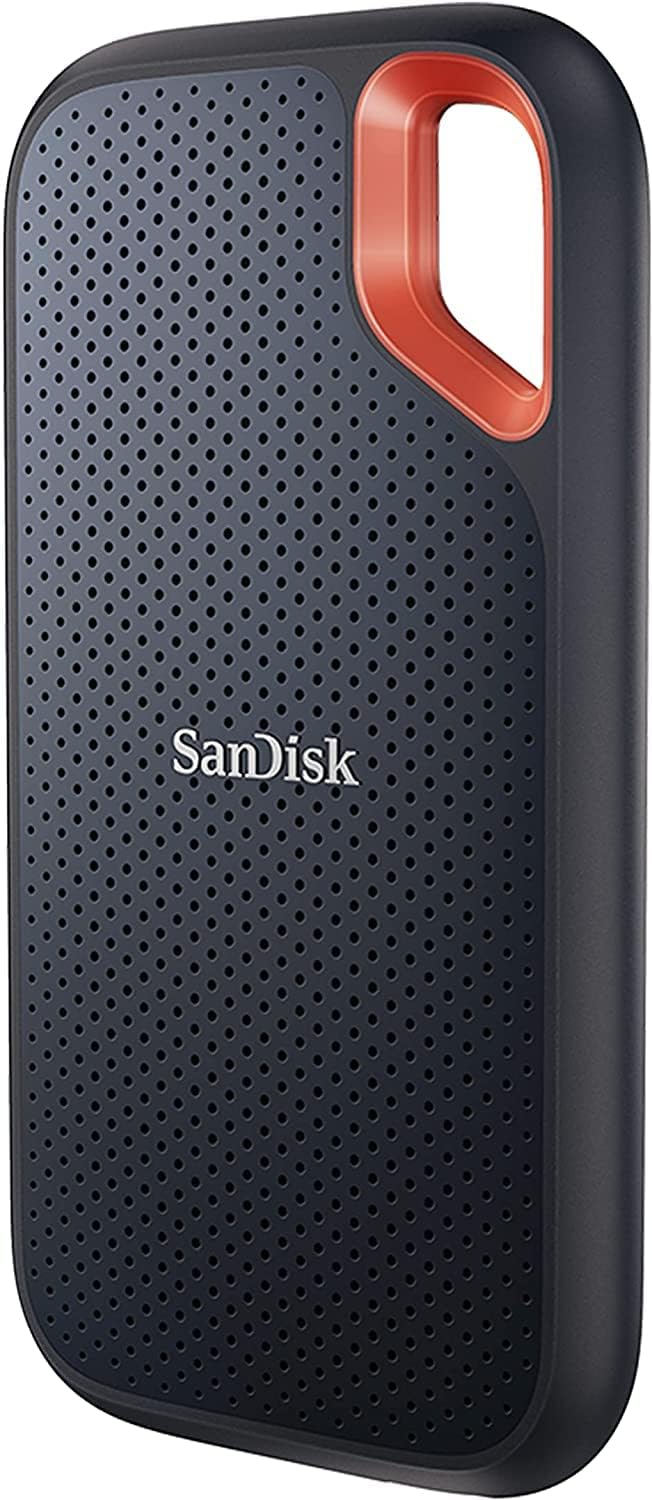
 SanDiskSandisk 2TB Extreme Portable SSD, Up to 1050MB/s, USB-C, USB 3.2 Gen… |
9.2/10Very good | Sandisk 2TB Extreme Portable SSD suits field engineers, video editors, and mobile professionals who require transportable storage rather than fixed internal hardware. Reaching speeds up to 1050MB/s over USB-C and USB 3.2 Gen 2, it features an IP65 water and dust resistance rating, making it a rugged external companion for field data collection away from a stationary desk. View listing |
 Fanxiang256GB External SSD USB Drive, 520MB/s USB-C & USB-A Portable SSD -F901 |
9.2/10Very good | Zinc Alloy serves mobile users and cross-platform operators who need straightforward external storage across multiple portable devices. Offering 256GB of storage with 520MB/s data rates over dual USB-C and USB-A connectors, it connects seamlessly to iPhone models, Android phones, PCs, Macs, and tablets for easy daily document and media transfers without complex desktop installation. View listing |
Scores are out of 10, based on listed specifications and buyer feedback. Prices are the ones on the listing when this page was written.
FAQ
What interface does the Intel Optane SSD 905P use?
The Intel Optane SSD 905P uses a PCI-Express NVMe 3.0 x4 interface packaged in an enterprise 2.5-inch, 15mm U.2 physical form factor. Connecting it requires a native U.2 motherboard port, a compatible Mini-SAS HD connection cable, or an add-in PCIe host adapter card.
What is the write endurance of the 1.5TB Intel Optane SSD 905P?
The 1.5TB version carries a certified endurance rating of 27.37 Petabytes Written (PBW). This allows users to write massive quantities of data continuously for years without wearing out the internal 3D XPoint memory cells.
Can the Intel Optane SSD 905P be installed in a standard M.2 slot?
No, the drive cannot be installed directly into an M.2 slot due to its 15mm-thick 2.5-inch U.2 casing. However, it can be linked to a system using an appropriate M.2-to-U.2 adapter cable that routes the required PCIe NVMe 3.0 x4 lanes to the drive.
What are the read and write latency specifications for the Optane 905P?
The drive is rated for an ultra-low read latency of 10 microseconds and a write latency of 10 microseconds. This low-latency response remains steady regardless of whether the drive is executing reads, writes, or mixed I/O operations.
How much power does the Intel Optane SSD 905P consume?
The drive consumes up to 18.6 watts during active computing operations and draws 6.2 watts while idle. Because of this power consumption, adequate workstation enclosure airflow across its cooling fins is necessary to keep operating temperatures within the safe 0°C to 85°C limit.
More PC Components & Storage ratings
See the section
ASUS ROG Strix RTX 4070 Super: Definitive Performance Breakdown
Choosing the right GPU for an intensive workstation requires balancing raw compute capability, sustained thermal headroom, and acoustic isolation under heavy render loads. The…

MSI Z270 Gaming M7 Motherboard: Full Feature & Performance Breakdown
Replacing a defective motherboard in an operational workstation or gaming system often forces an expensive decision between a full hardware overhaul and finding a…
AMD Ryzen 5 5600 Desktop Processor: The Pragmatic AM4 Upgrade
If you need a dependable, high-efficiency processor to upgrade an aging desktop, the AMD Ryzen 5 5600 is an exceptional choice for modern multitasking…
Buyer favourite Scored 9.0+/10

Kingston Canvas Go! Plus 256GB microSDXC: A Fast, Reliable Field Storage Solution
For creators capturing high-bitrate aerial footage, action photography, and handheld gaming libraries, finding reliable storage that prevents dropped frames without overspending on unnecessary cinema…

MSI MAG B860 Tomahawk WiFi: The Pragmatic LGA 1851 Motherboard
For system builders and technical professionals deploying Arrow Lake desktop systems, choosing an intel b860 lga 1851 motherboard represents a calculated decision to bypass…
Get new ratings by email
A weekly digest of the products added to the ratings pages.