Canon EOS C80 Assessment: Professional 6K Production Power
The Canon EOS C80 enters the cinema market as an agile production camera engineered to bridge commercial cinema performance with compact field mobility. Equipped with a 6K full-frame back-illuminated stacked CMOS sensor…
By Brian Carver 9 min read

Canon EOS C80
Canon
Very good
Our score: 9.0/10
Scores are out of 10, based on listed specifications and buyer feedback.
- Specs listed
- 14
- Section
- Cameras & Drones
Check price on Amazon We may earn a commission if you buy through this link.
As Amazon Associates, we earn from qualifying purchases. This means we may receive a small commission at no extra cost to you if you click through and make a purchase.
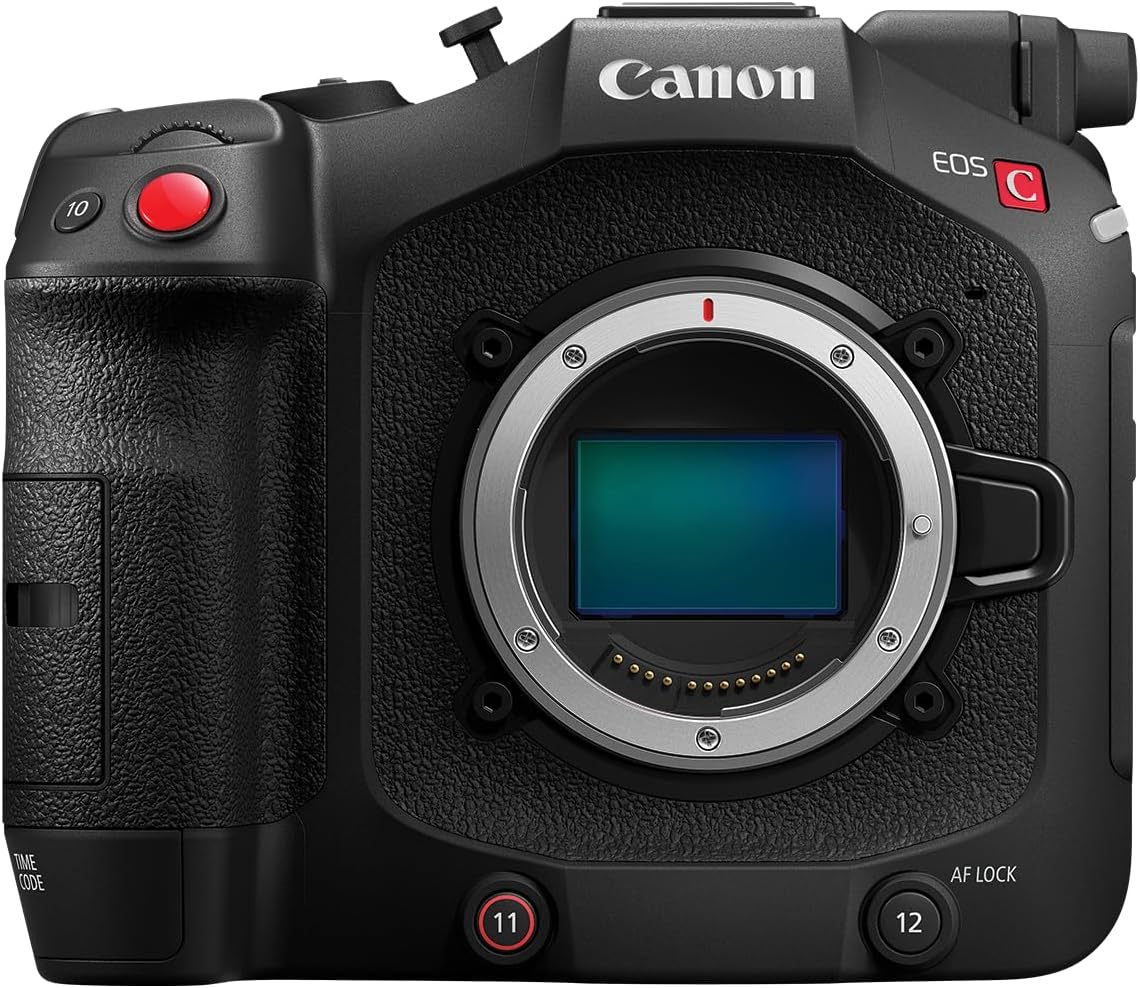
The Canon EOS C80 enters the cinema market as an agile production camera engineered to bridge commercial cinema performance with compact field mobility. Equipped with a 6K full-frame back-illuminated stacked CMOS sensor and Canon’s RF lens mount, this cinema camera addresses the escalating demand for high-resolution capture, low-light flexibility, and reliable autofocus in fast-moving professional environments. For independent filmmakers, documentary crews, and commercial visual teams evaluating an upgrade to full-frame digital acquisition, this camera targets the middle ground between handheld ergonomics and uncompromised multi-camera broadcast connectivity.
Choosing this cinema platform requires understanding how its modern stacked architecture and internal recording modes fit into your existing post-production pipeline and field workflow. While transitioning creators might look back at simpler hybrid tools like the cannon eos r10 or legacy workhorses such as the older canon eos 60d, the C80 is an uncompromising professional cinema tool built for production-grade reliability. This guide analyzes the core capabilities of the camera, detailing its triple-base sensitivity, recording codecs, autofocus precision, physical handling considerations, and overall production value.


What You Get With the Canon EOS C80
The Canon EOS C80 package provides an advanced imaging core configured for modular rigging, multi-angle production, and direct integration into modern broadcast or cinema workflows. The listing details the fundamental hardware components and operational capabilities included with the camera body:
In the box
- Canon EOS C80 cinema camera body in black finish
- 6K full-frame back-illuminated stacked CMOS sensor delivering 26.67 effective megapixels
- Native Canon RF mount system compatible with modern RF glass
- Triple-base ISO architecture with selectable base points at ISO 800, 3200, and 12,800
- Dual Pixel CMOS AF II intelligent autofocus tracking technology
- Internal recording support for 6K 30p Cinema RAW Light and high-speed 4K/120p
- Compressed video format recording in XF-AVC, XF-HEVC S, and XF-AVC S
- Integrated 12G-SDI terminal for uncompressed live video output
- Built-in networking options including RJ-45 Ethernet and wireless Wi-Fi interfaces
- Integrated 3.5-inch articulating display monitor
- Digital image stabilization for handheld stabilization support
Key Specifications
| Sensor Type | Full-Frame (35mm) Back-Illuminated Stacked CMOS |
|---|---|
| Effective Still / Photo Resolution | 26.67 Megapixels |
| Lens Mount Compatibility | Canon RF |
| Native Base ISO Settings | Triple-Base (ISO 800, ISO 3200, ISO 12,800) |
| Minimum Expanded ISO | ISO 500 |
| Internal RAW Recording | 6K at 30p (Cinema RAW Light) |
| High Frame Rate Recording | Up to 4K at 120p |
| Compressed Recording Formats | XF-AVC, XF-HEVC S, XF-AVC S, JPEG |
| Autofocus Technology | Dual Pixel CMOS AF II |
| Onboard Display | 3.5-Inch Monitor |
| Broadcast Video Interface | 12G-SDI Output |
| Network Connectivity | Gigabit Ethernet & Built-In Wi-Fi |
| Shutter Speed Range | 1/8000 second to 0.000125 second |
| Item Listed Weight | 6.5 pounds |
All 84 attributes from the listing
| Compatible Mountings | Canon RF |
|---|---|
| Aspect Ratio | 16:9 |
| Sensor Type | CMOS |
| File Format | JPEG |
| Image stabilization | Digital |
| Expanded ISO Minimum | 500 |
| Photo Sensor Resolution | 26.67 mp |
| Photo Sensor Size | Full Frame (35mm) |
| Maximum Shutter Speed | 1/8000 seconds |
| Minimum Shutter Speed | 0.000125 seconds |
| Exposure Control | Program, Aperture Priority, Shutter Priority, Manual, Automatic |
| Form Factor | Battery |
| Effective Still Resolution | 26.67 mp |
| Special Feature | Dual Pixel CMOS AF II |
| Color | Black |
| Screen Size | 3.5 inches |
| Shooting Modes | [Portrait, Landscape, Manual, Automatic, Movie] |
| Item Weight | 6.5 pounds |
| Video Resolution | 6000×3164 |
| Viewfinder | Electronic |
| Camera Flash | no flash |
| Skill Level | Professional |
| Specific Uses For Product | Videography, Photography |
| Compatible Devices | Computers, possibly other Wi-Fi/Ethernet-enabled devices |
| Continuous Shooting | 120 frames per second |
| Aperture modes | Fx.x-Fy.y or Fx.x |
| Viewfinder Magnification | 1.0x |
| Flash Sync Speed | 1/120 |
| Video Capture Format | MP4 |
| Expanded ISO Maximum | 12800 |
| Connectivity Technology | USB |
| Wireless Technology | Wi-Fi |
| Video Output | SDI |
| Total USB 3.0 Ports | 1 |
| Total USB Ports | 1 |
| Total Video Out Ports | 2 |
| Total USB 2.0 Ports | 1 |
| Hardware Interface | Ethernet, HDMI |
| Digital Scene Transition | false |
| Image Capture Type | Stills & Video |
| Write Speed | 120 fps (stills), 100-150 MB/s (video) |
| Flash Memory UHS Speed Class | U1 |
| JPEG Quality Level | Normal |
| Supported Image Format | JPEG |
| Bit Depth | 12 Bit |
| Total Still Resolution | 26.67 mp |
| Maximum Image Size | 0.04 inches |
| Optical Zoom | 1 x |
| Lens Type | Macro |
| Zoom | Optical Zoom |
| Camera Lens | macro lens |
| Real Angle Of View | 46.8 degrees |
| Lens Construction | Macro |
| White Balance Settings | Auto |
| Crop Mode | 16:9 |
| Brand | Canon |
| Model Name | EOS C80 |
| Built-In Media | Camera Body & Accessories |
| Model Number | 6389C002 |
| Model Series | EOS |
| Series Number | 80 |
| Generation | 80 |
| Number of Items | 1 |
| UPC | 013803371970 |
| Manufacturer | Canon |
| Manufacturer Part Number | 6389C002 |
| Warranty Description | 1 Year Manufacturer |
| Best Sellers Rank | #205,283 in Electronics (See Top 100 in Electronics) #597 in Mirrorless Cameras |
| ASIN | B0DG9C6CR9 |
| Display Type | LCD |
| Dots Per Screen | 960×540 |
| Display Fixture Type | Articulating |
| Display Maximum Resolution | 6000 X 4000 |
| Display Resolution Maximum | 24 MP |
| Touch Screen Type | Capacitive |
| Auto Focus Technology | Manual Focus |
| Focus Features | Autofocus |
| Autofocus Points | 350 |
| Focus Type | Manual Focus |
| Focus Mode | Manual Focus (MF), Single-Servo AF (AF-S) |
| Photo Sensor Technology | CMOS |
| Supported File Format | JPEG |
| Image Stabilization | Digital |
| Maximum Webcam Image Resolution | 26.67 mp |
Figures as published by the manufacturer on the Amazon listing.
Sensor Performance and Dynamic Range Handling
At the center of the camera is the Canon C80 6K sensor, constructed using a back-illuminated stacked CMOS design. Stacked sensor technology places the high-speed processing circuitry directly beneath the photo diodes, substantially increasing the data readout speed across the entire 35mm full-frame surface. This accelerated readout significantly mitigates rolling shutter artifacts, allowing camera operators to pan quickly during unscripted action or whip-pan across live event venues without vertical lines bending or skewing unnaturally.
Light management and exposure flexibility are further enhanced by the triple-base ISO architecture. Having dedicated native base levels at ISO 800, ISO 3200, and ISO 12,800 gives cinematographers clean signal processing across vastly diverse lighting setups without forcing artificial gain amplification. Shooters working in daylight or bright studios utilize the baseline ISO 800 for optimal highlight retention, while shifting directly to ISO 3200 or ISO 12,800 permits shooting in dim interiors or nighttime exteriors without introducing excessive chroma noise.
The 26.67-megapixel capture surface allows for sharp downsampling when outputting 4K deliverables, generating video with exceptional clarity, smooth edge definition, and precise color transitions. This sensor also offers an expanded minimum ISO down to 500, giving cinematographers finer control when balancing aperture choices in high-ambient environments. For visual storytellers, the combination of the Canon C80 full frame sensor and stacked readout establishes a reliable baseline for clean, filmic footage.
Internal Recording Codecs and Data Workflows
A primary consideration for commercial and narrative video crews is internal recording versatility, and the availability of Canon EOS C80 internal raw recording directly inside the camera streamlines production footprints. The system records 6K resolution at up to 30 frames per second in Canon Cinema RAW Light. This codec preserves the maximum sensor data, wide color gamut, and latitude required for demanding color grading and visual effects pipelines without requiring an unwieldy external recorder mounted to the cage.
Beyond internal raw capture, the camera offers a comprehensive suite of compressed production codecs suited for tight turnaround timelines. Operators can utilize XF-AVC, XF-HEVC S, and XF-AVC S recording profiles to match the speed and compression balance demanded by the job. When high-speed motion analysis or dramatic slow-motion capture is required, the camera supports 4K recording up to 120p, ensuring smooth playback without sacrificing resolution or full-frame image fidelity.
The presence of flexible recording profiles makes this system adaptable to diverse post-production environments. Editorial teams handling news, documentary, or corporate turnarounds can ingest the lighter XF-AVC S files immediately for rapid assembly, while high-end post houses can unpack the 6K Cinema RAW Light files to manipulate shadow details and skin tones freely. While the listing does not specify internal storage card slot configurations, the native internal codec suite reduces cabling hazards on active production sets.
Autofocus Precision and Mount Compatibility
Subject tracking in modern commercial shooting often demands responsive automation, and the inclusion of Canon C80 Dual Pixel CMOS AF II represents a significant operational asset for small crews. The phase-detection system spans the sensor surface to acquire and track subjects with precision, identifying eyes, faces, and human forms even when subjects turn away or enter cluttered scenes. For solo operators managing camera motion, audio monitoring, and composition simultaneously, this autofocus tracking prevents missed takes caused by critical focus drift.
Lens selection is anchored by the Canon EOS C80 RF mount, granting direct native access to Canon’s contemporary line of RF cinema and photographic lenses. The RF mount features a short flange focal distance and a robust 12-pin electronic interface that enables fast bidirectional communication between the camera brain and the mounted lens. This rapid data pathway supports precise autofocus driving, instant aperture control, and transmission of optical correction data directly to the camera processor.
For cinematographers who have invested in legacy glass or alternate systems, the RF mount standard is among the most adaptable in the industry. Through optional mechanical and optical adapters, operators can easily mount vintage cine glass, PL-mount cinema lenses, or EF-mount lenses to the camera body. Combined with the digital image stabilization built into the camera system, the mount architecture accommodates both modern fly-by-wire autofocus zooms and fully manual geared cinema primes.
Rigging Considerations and Broadcast Connectivity
Studio environments, live broadcast integrations, and multi-camera live streams demand dependable physical connectivity. The inclusion of a 12G-SDI terminal on the camera body ensures that uncompressed 4K signals can be piped directly to professional video switchers, wireless transmitters, or director monitors over long cable runs without signal degradation. Alongside the SDI port, integrated RJ-45 Ethernet and built-in Wi-Fi provide network infrastructure for IP streaming, remote browser-based camera control, and multi-unit studio synchronization.
Physical handling requires factoring in the camera’s form factor and listed item weight of 6.5 pounds. While significantly lighter and more compact than traditional shoulder-mounted studio rigs, this mass provides substantial inertia that minimizes micro-jitters during handheld shooting. It is, however, noticeably heavier than lightweight consumer mirrorless bodies such as the canon r50 v, necessitating heavy-duty gimbal systems, sturdy tripod heads, and dedicated quick-release plates when configuring the camera for full-day field production.
The integrated 3.5-inch display monitor offers an intuitive interface for framing, exposing, and reviewing shots directly on the body. Operators working in fast-paced commercial spaces can verify framing through standard 16:9 aspect ratios while relying on digital stabilization to smooth out organic handheld movements. The inclusion of manual, automatic, program, aperture-priority, and shutter-priority exposure control modes ensures that the camera can conform instantly to either strict cinema conventions or rapid documentary scenarios.
Canon EOS C80 Pros and Cons
Pros
- 6K stacked full-frame CMOS sensor
- Triple-base ISO at 800, 3200, and 12,800
- Internal 6K Cinema RAW Light recording
- Dual Pixel CMOS AF II autofocus tracking
- Integrated 12G-SDI and Ethernet connectivity
Cons
- Listed 6.5-pound weight demands heavy-duty rigging
- Image stabilization relies solely on digital processing
- Internal RAW frame rates cap at 30p
Is the Canon EOS C80 Worth It
Determining whether the Canon EOS C80 cinema camera is the right acquisition depends heavily on your production scale, client deliverables, and rigging demands. For commercial production houses, corporate video departments, and live broadcast facilities, the camera delivers an outstanding balance of professional video infrastructure. Having native 12G-SDI, Ethernet networking, full-frame 6K Cinema RAW Light, and triple-base ISO sensitivity built into a unified chassis eliminates the clutter of external converters, monitors, and add-on audio modules.
The camera is particularly compelling for independent documentary filmmakers. The combination of the Canon EOS C80 for documentary field recording with Dual Pixel CMOS AF II and low-light triple-base ISO allows single-operator shooters to capture spontaneous events in uncontrolled lighting with high confidence. While an unrigged body weight of 6.5 pounds requires upper-body endurance or support accessories during prolonged handheld sessions, the reliability of its internal codecs and autofocus tracking saves critical production time.
Conversely, creators whose primary output consists of casual web video, social media snippets, or lightweight vlogging will find this camera over-engineered for their day-to-day requirements. Shooters with basic video needs are often better served by simpler, lighter mirrorless tools that prioritize effortless portability over cinema interfaces. But for professionals who bill clients for pristine imagery, color latitude, and multi-camera reliability, this camera stands as an exceptionally capable production centerpiece.
Other Options to Consider
| Model | Our score | Why it is here |
|---|---|---|
 CanonCanon EOS C80 6K Full-Frame Cinema Camera – BlackReviewed here |
9.0/10Very good | The model reviewed on this page. View listing |
 SonySony ILME-FX6 Cinema Line Full-Frame Camera with SEL24105G, 10.2 MP, 2K, 4K |
10.0/10Excellent | 10.2 MP (Sony ILME-FX6 Cinema Line Full-Frame Camera with SEL24105G) serves visual professionals who prefer the native Sony E-mount ecosystem and an established broadcast cinema workflow. When comparing the Canon EOS C80 vs FX6, the Sony unit provides a 10.2-megapixel sensor optimized strictly for 4K readout, appealing to creators invested in high-sensitivity 4K capture who do not require the higher-resolution 6K capture and 26.67-megapixel still resolution found on the Canon platform. View listing |
 SonySony Alpha FX3 | ILME-FX3A | Full-Frame Cinema Line Camera, Black |
9.4/10Excellent | Sony Alpha FX3 represents a compelling option for solo shooters and run-and-gun operators prioritizing an ultra-compact cinema line form factor. While it lacks the dedicated 12G-SDI connectivity and higher 6K resolution of the C80, the FX3 offers full-frame video recording in a lightweight handheld chassis that balances seamlessly on lightweight travel gimbals and compact rigs. View listing |
Scores are out of 10, based on listed specifications and buyer feedback. Prices are the ones on the listing when this page was written.
FAQ
Does the Canon EOS C80 support internal RAW recording?
Yes, the camera supports internal 6K recording at up to 30p using Canon Cinema RAW Light. This allows filmmakers to capture full-sensor raw data directly to internal media without requiring an external recorder attached via SDI or HDMI.
What lens mount does the Canon EOS C80 use?
The camera features Canon’s native RF mount. This modern mount supports full electronic communication with Canon RF cinema and photo lenses, and it can be adapted to accommodate EF, PL, and vintage lenses via third-party or optional adapters.
What are the triple-base ISO settings on the Canon EOS C80?
The camera features triple-base native ISO settings calibrated at ISO 800, ISO 3200, and ISO 12,800. These dedicated baseline settings allow operators to shoot in varying light levels with minimal electronic noise and optimal dynamic range.
Can the Canon EOS C80 output video through 12G-SDI?
Yes, the camera includes an integrated 12G-SDI terminal. This broadcast-standard connection outputs uncompressed 4K signals over single coaxial cables, making it suitable for live video switchers, wireless video transmitters, and field monitor setups.
Does the camera feature image stabilization?
The camera is equipped with a digital image stabilization system. This processing feature helps steady handheld footage and smooth out motion vibrations when operating without heavy support rigs or dedicated mechanical stabilizers.
What is the physical weight of the camera body?
According to the product specifications, the item weight is listed at 6.5 pounds. Operators should account for this mass when selecting tripods, gimbals, and support systems for prolonged field operations.
More Cameras & Drones ratings
See the section
Olympus LI-50B Battery: Decisive OEM Replacement Guide
When bringing a legacy compact camera back into active service, securing an authentic Olympus LI-50B battery pack provides immediate peace of mind. Sourcing an…

Olympus Stylus Tough 8010: Essential Rugged Camera Analysis
Evaluating whether a dedicated compact camera belongs on a modern job site requires looking past touchscreens and wireless gimmicks to focus strictly on physical…

GoPro Media Mod for HERO10: The Quick Professional Verdict
When planning to build a compact video rig, creators often ask whether adding the GoPro Media Mod is the right move for their workflow.…
Buyer favourite Scored 9.0+/10

Canon PowerShot S110 Review: Pocket-Sized Pro Imaging
When selecting a portable camera that balances manual control with true pocket convenience, the Canon PowerShot S110 remains a compelling tool for mobile visual…

DJI Osmo Action 6 Review: Decisive Buying Advice for Creators
Choosing a flagship action camera for fast-paced video production requires cutting through marketing noise to examine core capture hardware. The DJI Osmo Action 6…
Get new ratings by email
A weekly digest of the products added to the ratings pages.