BUERTS or Coleman? Sleeping Bags Compared in 2026
Compare BUERTS vs Coleman sleeping bag specs. We analyze insulation, weight, and temperature ratings for 2 models to help you choose the right gear.
By GearRank Editorial Team 6 min read

Warning: Undefined array key "caption" in /www/wwwroot/gearrank.net/wp-content/themes/site-ratings/single.php on line 62
BUERTS or Coleman? Sleeping Bags Compared in 2026
This listing has no buyer rating yet.
- Section
- Sleeping Bags
Check price on Amazon We may earn a commission if you buy through this link.
As Amazon Associates, we earn from qualifying purchases. This means we may receive a small commission at no extra cost to you if you click through and make a purchase.
As an Amazon Associate we earn from qualifying purchases. Links on this page are affiliate links.
When comparing the BUERTS vs coleman sleeping bag, you face two distinct approaches to outdoor comfort. Both brands target adults seeking reliable gear for camping and hiking. The main difference lies in insulation and design philosophy. BUERTS uses premium down for ultralight performance, while Coleman relies on synthetic Coletherm Max fill for durability and cold-weather resilience. You must decide whether lightweight packability or robust warmth fits your next adventure.
Insulation Type
680 FP Down
Coletherm Max Synthetic
Weight
1.85 lbs
not listed
Temperature Rating
32°F
20°F
Shell Material
400T 20D fabric
not listed
Shape
Envelope
Mummy (implied by compact roll)
Choose the first if
- You prioritize ultralight weight for backpacking trips.
- You need a compact pack size under 6.3 inches.
- You prefer natural down insulation for better warmth-to-weight ratio.
Choose the second if
- You expect temperatures to drop to 20°F or lower.
- You want synthetic fill that retains heat when damp.
- You value patented features like ZipPlow and Thermolock draft tubes.
Verdict
Choose the BUERTS bag if your priority is minimizing pack weight and volume for long-distance hiking. Select the Coleman option if you require a lower temperature rating and synthetic insulation for wetter or colder conditions. Your decision should hinge on the expected weather and your carry capacity.
BUERTS vs Coleman Sleeping Bag
Temperature Rating
Edge: Coleman Kompact 20°F Blue
The BUERTS 680FP Ultralight Down Bag lists an extreme temperature rating of 32°F. It is designed for comfort between 59 and 44°F. This makes it suitable for mild to cool nights. The Coleman Kompact Sleeping Bag offers a 20°F rating. This allows you to stay warm in significantly colder conditions. If you camp in early spring or late autumn, the Coleman handles lower temperatures better. The BUERTS bag is a better choice for summer or three-season trips where temperatures stay above freezing. You should match the rating to your expected nightly lows.
Weight and Portability
Edge: BUERTS 680FP Ultralight Down Bag
Weight is a major factor for backpackers. The BUERTS bag weighs only 1.85 lbs. It uses premium RDS certified down to provide warmth without bulk. This ultralight weight is ideal for long hikes where every ounce counts. The Coleman Kompact Sleeping Bag does not list a specific weight in the provided data. However, it uses Coletherm Max fill, which is described as lightweight. The BUERTS bag also compresses to a small 6.3 by 11 inches. This compact size fits easily into a pack. For hikers prioritizing minimal weight, the BUERTS specification is clearly superior.
Insulation Type
Edge: Tie
Insulation determines how the bag retains heat. The BUERTS bag uses 680 Fill Power down. Down insulation is known for its excellent warmth-to-weight ratio and compressibility. It provides exceptional warmth for its light weight. The Coleman bag uses Coletherm Max fill. This is a synthetic insulation that offers better heat retention with less weight than traditional synthetic fills. Synthetic insulation performs better when wet compared to down. If you expect damp conditions, the Coleman synthetic fill may be more reliable. For dry, cold weather, the down in the BUERTS bag offers superior loft.
Design and Features
Edge: Tie
Design features affect comfort and convenience. The BUERTS bag has an envelope shape. It includes an inner pocket for valuables like cell phones. It can also zip together with another bag to form a double sleeping bag. The Coleman bag features several patented designs. These include a ZipPlow zipper for snag-free operation and a Thermolock draft tube to prevent heat loss through the zipper. It also has a Comfort Cuff for face protection. The Coleman design focuses on zipper reliability and draft prevention. The BUERTS design focuses on versatility and storage.
Material and Build
Edge: BUERTS 680FP Ultralight Down Bag
The materials used impact durability and feel. The BUERTS bag is made of 400T 20D fabric. This material is windproof, anti-static, and waterproof. It provides reliable protection for backpacking. The Coleman bag does not specify its shell fabric in the provided data. It does mention a compressible stuff sack with side straps for cinching. The BUERTS fabric choice suggests a focus on weather resistance and lightweight durability. The Coleman stuff sack design emphasizes easy packing. You should consider the shell material if rain or wind is a concern.
Choose your sleeping bag
Ultralight backpackers prioritizing low weight
Our pick: BUERTS 680FP Ultralight Down Bag
Weighing just 1.85 lbs, this bag is ideal for long treks. The 680 FP down insulation offers excellent warmth without bulk. Its compact 6.3 by 11 inch compression size fits easily into tight pack spaces. You save energy by carrying less gear on your back.
Campers needing cold weather protection
Our pick: Coleman Kompact 20°F Blue
This Coleman model is rated to 20°F, handling colder nights than the BUERTS option. The Coletherm Max fill retains heat effectively in chill conditions. Features like the Thermolock draft tube and ZipPlow zipper prevent heat loss and snags, ensuring reliable comfort when temperatures drop significantly.
Users valuing durable synthetic fill
Our pick: Coleman Kompact 20°F Blue
Coleman uses synthetic Coletherm Max insulation, which performs well in damp conditions compared to down. The design includes a Comfort Cuff for face protection and Roll Control for easy packing. This synthetic approach offers a different maintenance profile, appealing to those who prefer non-down materials.
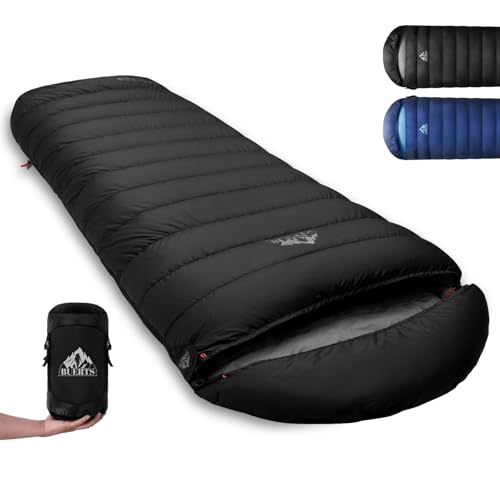
BUERTS 680FP Ultralight Down Bag
Best for: ultralight backpacking in mild cold
- Temperature Rating
- 32°F
- Insulation Type
- Down
- Shape
- Envelope
- Weight
- 1.85 lbs
- Fill Power
- 680FP
- Shell Material
- 400T 20D fabric
The BUERTS sleeping bag uses 680 fill power down to keep you warm in temperatures down to 32°F. It weighs just 1.85 lbs and compresses to 6.3 by 11 inches. The envelope shape measures 84.6 by 32.3 inches. You get a windproof, waterproof shell. This ultralight bag suits backpackers who need warmth without bulk.
- Weighs only 1.85 lbs for ultralight hiking
- 680 fill power down provides efficient warmth
- Compresses to 6.3 by 11 inches for easy storage
- 400T 20D shell is windproof and waterproof
- 32°F extreme rating is less versatile than 20°F options
- Envelope shape offers less warmth retention than mummy designs
- You need an ultralight bag for backpacking
- You camp in temperatures above 32°F
- You want a bag that compresses small
- You expect mummy shape warmth
- You need ratings below 32°F
- You prefer synthetic insulation
Verdict: BUERTS 680FP Down Sleeping Bag is a lightweight option for hikers who prioritize pack size. It fits those who camp in mild cold and value low weight over maximum thermal protection.

Coleman Kompact 20°F Blue
Best for: cool-weather camping with synthetic fill
- Temperature Rating
- 20°F
- Insulation Type
- Coletherm Max
- Color
- Blue
- Target Audience
- Adults
- Recommended Use
- Camping
- Dimensions
- 10 × 16 × 3 inches
The Coleman Kompact is a synthetic sleeping bag rated for 20°F. It uses Coletherm Max fill for warmth without excessive weight. The bag packs down to 9.8 x 9.8 x 15.7 inches. It includes a draft tube and snag-free zipper. This model suits adults camping in cool weather who need reliable heat retention.
- Coletherm Max insulation retains heat efficiently
- Compact pack size of 9.8 x 9.8 x 15.7 inches
- Thermolock draft tube prevents zipper heat loss
- ZipPlow design prevents zipper snags
- 20°F rating is lower than the competitor's 680FP down bag
- Synthetic fill is bulkier than down alternatives
- You need a bag rated for 20°F temperatures
- You prefer synthetic insulation for damp conditions
- You want a compact pack size under 16 inches
- You require ultralight gear for backpacking
- You need a temperature rating above 20°F
- You prioritize down insulation over synthetic fill
Verdict: Coleman Kompact 20°F Sleeping Bag fits campers who prioritize synthetic warmth and compact packing over ultralight weight. It delivers reliable performance in cool conditions.
Specifications side by side
| Spec | BUERTS 680FP Ultralight Down Bag | Coleman Kompact 20°F Blue |
|---|---|---|
| Temperature Rating | 32°F | 20°F |
| Insulation Type | Down | Coletherm Max |
| Shape | Envelope | – |
| Weight | 1.85 lbs | – |
| Fill Power | 680FP | – |
| Shell Material | 400T 20D fabric | – |
| Intended Use | Hiking, Backpacking, Mountaineering | – |
| Color | Black | Blue |
| Insulation Material | Down | – |
| Target Audience | Adults | Adults |
| Recommended Use | Camping | Camping |
| Weight Class | Ultralight | – |
| Dimensions | 84.6 × 32.3 × 3 inches | 10 × 16 × 3 inches |
| Size | X-Large | 20°F |
| Model | BSE-B | 2205604 |
Frequently asked questions
Which sleeping bag is better for ultralight backpacking?
The BUERTS 680FP Ultralight Down Bag is the superior choice for hikers prioritizing low weight and small pack size. It features 680 fill power down insulation, which provides excellent warmth-to-weight ratio. This makes it ideal for long treks where every ounce matters. The Coleman option is heavier and bulkier, making it less suitable for strict ultralight goals.
Does the BUERTS bag work in cold weather?
The BUERTS bag is designed for mild cold, not extreme winter conditions. It targets adults camping in temperatures where comfort is between 59 and 44°F. The 680 fill power down offers thermal efficiency but relies on dry conditions. If you expect freezing temperatures, this bag may not provide sufficient insulation for your needs.
Is the Coleman bag suitable for hiking?
The Coleman Kompact 20°F Blue is better suited for car camping than hiking. It uses synthetic fill, which is heavier than down. While it compresses to 16 by 10 inches, the overall weight and bulk make it less ideal for backpacking. It is best for campers who drive to their site and prioritize reliable synthetic warmth over packability.
What is the difference between down and synthetic insulation here?
Down insulation, like in the BUERTS bag, offers higher warmth for less weight and compresses smaller. Synthetic fill, used in the Coleman bag, retains warmth when wet but is heavier and bulkier. Choose down for ultralight backpacking. Choose synthetic if you expect damp conditions or prefer easier care, though the Coleman model is still quite compact.
How large does the Coleman bag pack down?
The Coleman Kompact 20°F Blue packs down to dimensions of 16 inches wide, 10 inches long, and 3 inches high. This compact size fits easily into a car trunk or large backpack. However, it is larger than the BUERTS bag, which is designed for minimal pack footprint. This makes the Coleman better for casual camping trips.
Can I use the BUERTS bag for mountaineering?
The BUERTS bag lists mountaineering as an intended use. It is an ultralight option suitable for high-altitude environments where weight is critical. The 680 fill power down provides efficient warmth. However, it is rated for mild cold. Ensure you have appropriate layers and a tent system for the specific altitude and weather conditions you will face.
Which bag is wider for comfort?
The BUERTS 680FP Ultralight Down Bag has a width of 32.2 inches. This provides ample room for movement inside the bag. The Coleman bag does not list body width in its specs, focusing instead on packed dimensions. If you prefer a spacious feel while sleeping, the BUERTS measurement suggests a more generous interior volume for adults.
See also
More Sleeping Bags ratings
See the section
Best QEZER Black Sleeping Bags in 2026: 3 Picks
We compared 3 QEZER black sleeping bags using only published specifications. This guide helps you select the right insulation and weight for your hiking…

What Is Shape? A Guide for Sleeping Bags Buyers (2026)
Understand how mummy, quilt, and rectangular shapes impact warmth and pack size. Compare 6 sleeping bags using published specifications to find your ideal fit.

Best Kelty Sleeping Bags Under $150: 2 Spec-Based Picks
Compare 2 Kelty sleeping bags under $150 using published specifications. We analyze insulation, temperature ratings, and shapes to help you find the right gear.

Insulation Material in Sleeping Bags: What It Is and Is It Worth It?
Insulation material explained helps you choose between down and synthetic fill. Compare specs for weight, warmth, and packability in 6 sleeping bags.
Best Kelty Sleeping Bags Under $200: 4 Spec-Based Picks
We compared 4 Kelty sleeping bags under $200. This guide uses published specifications to help you choose the right mummy or rectangular bag for…
Get new ratings by email
A weekly digest of the products added to the ratings pages.